Red algae in swimming pools is almost always a bacterial growth rather than true algae – primarily Serratia marcescens producing red pigment called prodigiosin, appearing as rust-coloured specks, reddish-pink slimy patches, or salmon-coloured streaks in corners, behind ladders, inside skimmers, around return jets, and on PVC surfaces.
True red algae (Rhodophyta) is a marine organism that does not survive in freshwater chlorinated pools. Any red or reddish-pink growth in a pool is bacterial or caused by metal staining. Iron contamination in fill water causes reddish-brown staining on surfaces when oxidised by chlorine. Correct identification determines treatment: bacterial red growth requires biocide and triple shock, while iron staining requires sequestrant and metal removal treatment.
This guide covers the three causes of red colouration in pools (bacterial Serratia marcescens, iron metal staining, oxidised copper), identification differences between bacterial growth and staining, Serratia marcescens biology and prodigiosin pigment, health risks, treatment protocol by cause, prevention, and natural pool biological competition preventing bacterial dominance.
Key Takeaways
- True red algae does not grow in pools – Rhodophyta is marine, not freshwater, dies in chlorinated water
- “Red algae” = bacterial growth – Serratia marcescens produces red pigment, not true algae
- Iron staining also appears reddish-brown – dissolved iron oxidised by chlorine deposits on surfaces
- Identification critical – slimy texture = bacterial, hard crystalline deposit = mineral staining
- Serratia marcescens health risk – opportunistic pathogen causing UTI, wound infections, respiratory illness
- Bacteria do not need light – grows in dark areas (pipes, behind lights, under steps)
- Triple shock + specific biocide required – standard shock alone insufficient
- Accessories and filter decontamination required – bacteria spreads via swimsuits, tools, filter media
Natural Pools Don't Get Red Algae Either
What “Red Algae” Actually Is
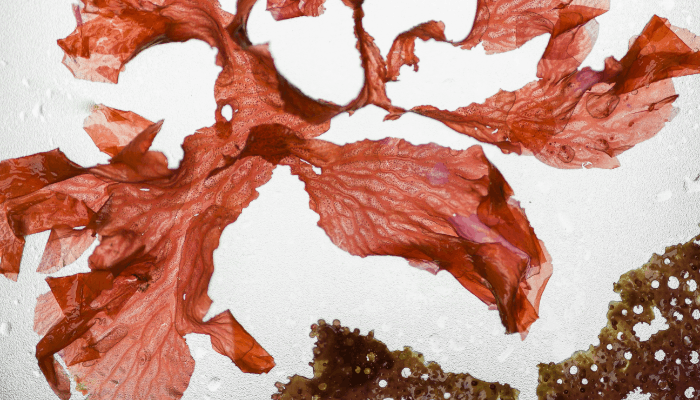
True Red Algae (Rhodophyta)
True red algae is a marine and freshwater plant-like organism found in oceans, coastal rock pools, and some freshwater rivers. It does not survive in chlorinated swimming pools as chlorine kills marine algae rapidly, and the salinity, temperature, and chemical conditions of residential pools are incompatible with Rhodophyta survival.
Conclusion: If you see red growth in a residential or commercial swimming pool, it is not true red algae. The term “red algae” in pool industry usage refers to bacterial growth or mineral staining, not the marine organism.
Serratia marcescens: The Real “Red Algae”
Classification: Serratia marcescens is a gram-negative rod-shaped bacterium belonging to the Enterobacteriaceae family. It produces a red pigment called prodigiosin. It’s a natural antibiotic compound responsible for the characteristic pink, red, or reddish-orange colouration of bacterial colonies.
Natural habitat: Airborne bacterium found in soil, water, air, and plants. Enters pools via wind, rain, contaminated swimsuits, pool accessories, or water fill from contaminated supply.
Preferred conditions: Does not require sunlight for growth (unlike true algae). Thrives in moist environments with organic nutrients such as soap residue, sunscreen, body oils, dead skin cells, and dissolved phosphorus. Strongly adheres to PVC plastic surfaces.
Why no sunlight needed: Critical identification point. True algae requires light for photosynthesis. Serratia marcescens is a heterotrophic organism consuming organic compounds, not producing energy from light. Grows readily in completely dark areas inside pipes, behind lights, under pool steps, or inside skimmer bodies.
Methylobacterium Species
Methylobacterium species (pink bacteria) produce similar pink-red pigmentation through different biochemical pathways. Also bacterial, not algae. Behaviourally similar to Serratia marcescens. It has the same preferred locations, similar resistance profile, and is treated with the same protocol.
Iron Staining: The Other Cause of Red-Brown Pools
Iron in Pool Water
Source: Dissolved iron enters pools through fill water (municipal water in some regions, private wells particularly), corroding metal fittings or heaters, iron-containing pool chemicals.
Colour when dissolved: Water with high dissolved iron (ferrous iron, Fe²⁺) appears clear or very slightly tinted. Iron invisible in dissolved state.
Colour after chlorine exposure: When chlorine is added, ferrous iron oxidises to ferric iron (Fe³⁺) – insoluble. Ferric iron precipitates as reddish-brown, orange-brown, or rusty deposits on pool walls, floor, and waterline. This oxidation reaction can turn pool water red-brown within hours of shocking.
Appearance: Reddish-brown to orange-brown staining firmly attached to surfaces. No slimy texture. Cannot be brushed off. Staining is a chemical deposit bonded to the surface.
Iron vs Bacterial Growth: Identification Test
Staining test: Pour a small amount of pH reducer (dry acid / sodium bisulphate) directly onto a stained area or into water above stain. If stain lightens or dissolves within minutes it’s most likely iron or metal staining. If there is no reaction, there’s organic growth (bacterial or algae).
Texture test: Bacterial growth is slimy and may dislodge with brushing. Metal staining is hard, smooth, and bonded to the surface. It does not brush off.
Location test: Bacterial growth preferentially appears in dark, low-circulation areas (corners, behind steps, inside fittings). Metal staining is distributed based on water flow patterns. It’s often heaviest where water returns to the pool (around jets), at the waterline, or uniformly across surfaces.
Chlorine test: After shocking pool, metal staining appears or worsens immediately (chlorine oxidises dissolved metals). Bacterial growth does not worsen immediately after shocking (shocked water kills bacteria initially).
Health Risks
Serratia marcescens Health Risk
Serratia marcescens is an opportunistic pathogen which causes serious infection in vulnerable individuals, but minor or no illness in healthy swimmers.
Infections documented:
Urinary tract infection (UTI): Primary route via contaminated water contact with urogenital area. Common in women and people with urinary catheters.
Wound infections: Enters body through cuts, abrasions, open wounds. Causes localised or systemic infection depending on immune status.
Respiratory infections: Inhaled aerosolised contaminated water (splashing, diving, hot tubs) can cause lung infections. Serratia pneumonia has been documented in immunocompromised individuals.
Eye infections: Conjunctivitis from direct water contact.
Serious systemic infections: Bacteraemia (bacteria in bloodstream), meningitis, endocarditis documented in severely immunocompromised individuals such as organ transplant recipients, chemotherapy patients, or HIV/AIDS patients with low CD4 counts.
For healthy swimmers: Most healthy adults experience no illness from brief exposure. Risk becomes significant with repeated or prolonged exposure, swallowing water, or pre-existing health conditions.
Do not swim: Pool with visible red-pink bacterial growth should not be used until treated and cleared.
Iron Staining Health Risk
Iron staining is not a health risk. Elevated dissolved iron in pool water causes no illness in swimmers. The concern with iron staining is aesthetic damage to pool surfaces and equipment corrosion.
Treatment by Cause
Treatment: Serratia marcescens (Bacterial Red Growth)
Step 1: Identify and isolate
Confirm bacterial growth (slimy texture, dark area preference, reacts to brushing). Note all affected locations including inside skimmer, return jet bodies, behind ladder bases.
Step 2: Test and adjust water chemistry
pH 7.2-7.4, alkalinity 80-120 ppm. Balanced chemistry before treatment essential.
Step 3: Turn off pump, apply biocide
Turn off the pool pump. Apply pink bacteria-specific biocide or algaecide labelled specifically for pink slime/red bacteria – generic green algaecides are insufficient. Apply around the pool perimeter following product dosage.
Wait 24 hours without the pump running. Contact time is required between biocide and bacteria.
Step 4: Brush all surfaces thoroughly
Brush walls, floor, steps, behind all fittings, ladder bases, skimmer interior walls. Force brush into corners, along return jet bodies. Bacteria does not brush off like mustard algae. Scrubbing is required to disrupt colonies.
Step 5: Triple shock
After a 24-hour biocide contact period, restart the pump. Triple shock pool to 30+ ppm free chlorine. Dissolved shock solution around perimeter in evening.
Run the pump continuously 24 hours.
Step 6: Decontaminate all accessories
All items that have contacted pool water like swimsuits (wash in washing machine with half cup liquid bleach on warm cycle), pool tools and toys (soak minimum 1 hour in 60 ml liquid chlorine per 10 litres water), vacuum hose (soak in chlorine solution, flush through), or solar covers (scrub with chlorine solution, rinse thoroughly).
Serratia marcescens spreads via contaminated swimsuits and accessories. A single untreated item causes immediate reinfection after treatment.
Step 7: Decontaminate filter completely
Bacteria colonises filter media heavily. Cartridge: soak overnight in cleaning solution (100 ml bleach per 10 litres), scrub pleats, rinse thoroughly, or replace if heavily fouled. Sand: add filter cleaner through skimmer, run 24 hours, backwash thoroughly. DE: full grid teardown, scrub, soak, rinse, reload fresh DE.
Step 8: Vacuum to waste
After 48 hours, the vacuum pool floor directs flow to waste (not through filter). Prevents re-seeding filters with dead bacteria.
Step 9: Maintain elevated chlorine one week
Free chlorine 3-5 ppm for 7 days post-treatment. Test daily. Add chlorine as needed.
Timeline: 5-7 days for initial control. Monitor for 2 weeks for recurrence.
Treatment: Iron Staining
Identification confirmation: Perform acid test (pH reducer on stain causes lightening) to confirm iron before treating.
Step 1: Test iron levels
Use an iron test kit or take a water sample to a pool supply shop. Dissolved iron above 0.3 ppm will cause staining when oxidised by chlorine.
Step 2: Add sequestrant
Metal sequestrant (chelating agent – citric acid based or EDTA based) binds dissolved iron ions, keeping them suspended in water rather than depositing on surfaces. Add sequestrants before any shocking. Shocking oxidises iron making it deposit immediately.
Dosage: Follow product instructions. Typically 240-480 ml per 40,000 litres for initial treatment.
Circulate 24 hours without shocking.
Step 3: Address existing staining
Mild staining: Rubbing with vitamin C tablet (ascorbic acid) directly on stain reduces iron deposits (confirms iron – stain lightens). Commercial iron stain remover applied per instructions.
Moderate to severe staining: Drain affected area if localised, apply diluted acid solution (consult professional for concentration and risk of surface damage). Full acid wash for severe whole-pool staining.
Step 4: Address iron source
Identify and fix iron entry point: test fill water iron level, check for corroding metal fittings, inspect heater for internal corrosion, review iron content of any added chemicals.
Ongoing treatment: Regular sequestrant additions (monthly during season) keep iron in suspension if source cannot be fully eliminated.
Common Causes and Contributing Conditions
Why Bacterial Red Growth Develops
Inadequate free chlorine: Below 1 ppm free chlorine allows Serratia marcescens to proliferate. Standard maintenance level 1-3 ppm sufficient to prevent establishment but not always adequate to clear existing colonies.
High cyanuric acid (CYA): CYA above 80-100 ppm reduces chlorine effectiveness. The pool may test 3 ppm free chlorine but chlorine is biologically inactive. Bacteria exploit this gap.
Low-circulation areas: Serratia does not need light. It grows anywhere, where circulation is poor. Return jet positions leaving dead zones create ideal establishment conditions.
Organic nutrient availability: Sunscreen, body oils, soap residue, dead skin cells provide food source. Heavy pool use without adequate circulation and chlorine supplementation accelerates bacterial growth.
Contaminated introduction: Ocean swimmers, river swimmers, or users who have swum in affected pools introduce bacteria via swimsuits, floats, or toys. Serratia survives on damp swimsuits for days.
Why Iron Staining Develops
Private well water: High dissolved iron common in groundwater, particularly in granite-rich or iron-rich soil geology (common in interior Portugal and rural areas).
Corroding equipment: Ageing metal heater heat exchangers, steel reinforcing in concrete pool walls, uncoated iron fittings releasing iron over time.
Low pH: Pool water below pH 7.2 accelerates metal corrosion and leaches iron from fittings. Maintaining correct pH 7.2-7.6 reduces iron release.
Prevention
Preventing Bacterial Red Growth
Maintain free chlorine 2-3 ppm consistently: Weekly testing. Serratia cannot establish above 1 ppm free chlorine in well-circulated water.
CYA 30-50 ppm: Stabilises chlorine without over-stabilising.
Direct return jets toward low-circulation areas: Reduce dead zones where bacteria establish preferentially.
Run pump minimum 8 hours daily: Continuous circulation prevents stagnation.
Rinse swimsuits before pool entry: Particularly after ocean swimming, river swimming, or use in pools unknown to be clean.
Shock pool after heavy use: Organic load from bathers depletes chlorine. Shock within 24 hours of heavy use preventing chemical gaps.
Preventing Iron Staining
Test fill water: Particularly important with private well water. If iron is above 0.3 ppm, use a sequestrant during filling.
Add sequestrant before shocking: Chlorine added to iron-containing water causes immediate staining. Add sequestrant first, circulate 24 hours, then shock.
Maintain pH 7.2-7.6: Reduces metal corrosion from acidic water.
Annual metal test: Include iron, copper, and manganese in annual water analysis, particularly if observing any staining or discolouration.
Natural Swimming Pools: Biological Balance Prevention
Natural swimming pools prevent bacterial overgrowth including Serratia marcescens through competitive exclusion by established beneficial microbial communities – the same mechanism preventing pathogen dominance in healthy natural water bodies.
Competitive exclusion: Dense populations of beneficial bacteria in regeneration zone gravel substrate and plant roots occupy the ecological niches Serratia marcescens exploits in sanitiser-deficient conventional pools. Beneficial bacteria consume organic matter (body oils, sunscreen residue, organic nitrogen) before pathogenic species can use these nutrients.
Continuous biological activity: Water circulating through planted regeneration zone contacts established beneficial biofilms continuously. No rest periods or chlorine depletion windows where opportunistic bacteria establish.
No organic accumulation in dead zones: Properly designed natural pools with continuous circulation through regeneration zones do not develop the low-flow organic-rich dead zones where Serratia preferentially colonises.
Natural water chemistry: Natural pools contain no cyanuric acid, no chemical imbalances, no situations where “effective” sanitiser is biologically inactive, eliminating the primary conditions enabling bacterial dominance in conventional chemical pools.
Iron management: Natural pool water chemistry (near-neutral pH through biological buffering, no aggressive chlorine-driven oxidation) reduces iron oxidation and deposition compared to chlorine-shocked conventional pools in areas with iron-rich fill water.
Oásis Biosistema designs natural swimming pools where beneficial bacterial communities in planted regeneration zones prevent pathogenic organism dominance through competitive exclusion, maintaining biologically balanced water without the sanitiser management gaps enabling red bacterial growth in conventional chemical pool systems across Portuguese landscape installations.
Conclusion
Red algae in swimming pools is not true red algae (Rhodophyta, a marine organism incompatible with chlorinated freshwater) but primarily Serratia marcescens – a bacterium producing red pigment called prodigiosin appearing as rust-coloured specks or reddish-pink slimy patches in dark, low-circulation areas including corners, behind ladders, inside skimmers, and on PVC surfaces, distinguished from iron staining (which appears as hard, non-slimy reddish-brown deposits that lighten with acid application).
Serratia marcescens is an opportunistic pathogen causing UTI, wound infections, and respiratory illness requiring treatment with bacteria-specific biocide (24-hour no-circulation contact period), triple shock to 30+ ppm, complete accessory decontamination by bleach washing, and filter media replacement, while iron staining requires sequestrant addition before chlorination followed by acid-based stain treatment.
Natural swimming pools designed by Oásis Biosistema prevent bacterial red growth through competitive exclusion in planted regeneration zones where beneficial bacterial communities in gravel substrate prevent pathogenic organism establishment through ecological balance without chemical sanitiser management in Portuguese chemical-free pool installations.
FAQ
Is it safe to swim in a pool with red algae?
No, it is not safe to swim in a pool with red algae. “Red algae” in pools is usually bacteria or organic contamination, not true algae. It indicates poor sanitation and low chlorine levels, which can increase infection risk and cause skin or eye irritation.
How do I get rid of red algae in my pool?
To remove red algae, brush all surfaces, shock the pool with chlorine, and run the filter continuously. Clean or backwash the system and maintain high sanitizer levels. In stubborn cases, use a strong algaecide and repeat treatment until surfaces are fully clean.
Is it safe to swim in a pool that has mustard algae?
No, swimming in a pool with mustard algae is not recommended. It signals poor water chemistry and low chlorine levels. Mustard algae can irritate skin and eyes and spread easily through contact, so the pool should be fully treated before use.
Is red algae good for rosacea?
No, red algae in pools is not beneficial for rosacea. It is not a skincare ingredient but usually a contaminant or bacteria. Swimming in contaminated water may worsen rosacea due to irritation, so clean, well-chlorinated water is always recommended.