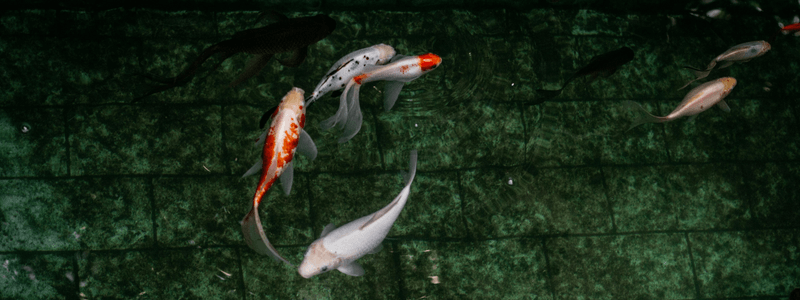
Koi fish require stable water quality with pH 7.0-8.0, ideal temperature between 15-25°C (59-77°F), seasonally adjusted feeding, effective biological filtration system, and pond depth minimum 120-150 cm (4-5 feet). These ornamental carp live 30-50 years when maintained in proper conditions, becoming more vibrant and growing continuously over decades with appropriate care.
This comprehensive guide covers all essential aspects of koi care: water quality requirements (chemical parameters, weekly testing), seasonal feeding (food types, temperature-adjusted frequency), filtration systems (mechanical and biological), pond depth and size, disease prevention, quarantine of new fish, and maintenance throughout the four seasons.
Key Takeaways
- Water quality is fundamental – pH 7.0-8.0, ammonia 0 ppm, nitrite 0 ppm, nitrate < 40 ppm
- Ideal temperature: 15-25°C (59-77°F) – koi survive 4-30°C but thrive in moderate range
- Biological filtration essential – beneficial bacteria convert toxic ammonia into less harmful nitrate
- Feeding adjusted seasonally – below 9°C don’t feed; 9-18°C wheat germ food; above 18°C protein food
- Minimum depth: 120-150 cm (4-5 feet) – protects from predators, maintains stable temperature, allows winter hibernation
- Population density: 1 koi per 1,000 liters (250 gallons) – overcrowding causes stress, disease, poor water quality
- Quarantine mandatory: 4-6 weeks – new fish isolated before introduction to main pond
Healthy Koi Need More Than Clean Water
Water Quality Requirements
Ideal Chemical Parameters
pH: 7.0-8.0 – Koi tolerate slightly alkaline pH better than acidic water. pH below 6.5 causes stress, suppresses the immune system, increases ammonia toxicity. pH above 8.5 is also stressful, and can cause chemical burns on gills.
Ammonia (NH₃): 0 ppm – Ammonia is highly toxic. Concentrations above 0.5 ppm cause stress; above 2 ppm often lethal. Ammonia comes from fish waste, unconsumed food, and decomposing organic matter.
Nitrite (NO₂): 0 ppm – Nitrite is toxic, causing “brown blood disease” that interferes with oxygen transport in fish blood. Concentrations above 0.5 ppm are dangerous.
Nitrate (NO₃): < 40 ppm – Nitrate relatively harmless at concentrations up to 40-80 ppm. High levels indicate the need for partial water changes or more aquatic plants.
Carbonate hardness (KH): 80-200 ppm – Stabilizes pH, prevents dangerous fluctuations. Low KH (< 50 ppm) causes dramatic pH swings.
Dissolved oxygen: > 7 mg/L – Koi require well-oxygenated water. Below 5 mg/L causes respiratory stress. Warm water (> 25°C) holds less oxygen – aeration critical in summer.
Testing Frequency
Weekly testing: pH, ammonia, nitrite, nitrate during spring-summer growing season. Parameters change rapidly with active feeding, high temperatures, and algae growth.
Bi-weekly testing: Autumn and winter when metabolism slows, feeding reduced, water quality more stable.
Immediate testing: After introducing new fish, after heavy rainfall (dilution, nutrient runoff), if fish exhibit abnormal behavior (erratic swimming, lethargy, refusing food).
Recommended test kits: Liquid kits (reagent drops) more accurate than test strips. Reliable brands include API Master Test Kit, NT Labs Pond Lab, Tetra Pond Test Kit.
Parameter Adjustments
Low pH (< 7.0): Add calcium carbonate (crushed limestone), sodium bicarbonate (raises KH and pH gradually).
High pH (> 8.5): Identify source (limestone rock, new concrete in pond). Partial water changes with neutral pH water.
High ammonia/nitrite: Reduce or stop feeding temporarily, partial water change 25-50%, add beneficial bacteria to accelerate nitrogen cycle, increase aeration.
High nitrate: Add aquatic plants (absorb nitrate), partial water changes, reduce feeding.
Water Temperature and Seasonal Behavior
Temperature Range and Metabolism
Below 4°C (39°F): Critical/lethal zone – koi become extremely lethargic, metabolism nearly stops, immune system severely compromised. Hypothermia possible with prolonged exposure.
4-9°C (39-48°F): Hibernation – koi rest at pond bottom, move minimally, don’t eat. Metabolism extremely slow conserves energy. DO NOT FEED.
9-12°C (48-54°F): Awakening and vulnerable zone “Aeromonas Alley” – koi begin moving, metabolism reactivates slowly, but the immune system is still weak. Parasites and bacteria (Aeromonas) active at this temperature, attack weakened koi. Feed with caution only if fish are actively seeking food.
12-15°C (54-59°F): Spring transition – appetite returns gradually, activity increases, immune system strengthens. Switch to wheat germ food (easily digestible).
15-18°C (59-64°F): Active spring – moderate metabolism, regular feeding established, growth begins.
18-25°C (64-77°F): Optimal range – full metabolism, maximum appetite, active growth, vibrant colors, energetic behavior. Ideal period for protein-rich food for growth and color enhancement.
25-28°C (77-82°F): Upper active limit – koi still eat and swim actively but begin feeling heat stress. Dissolved oxygen decreases (warm water holds less oxygen). Aeration critical.
Above 28°C (82°F): Danger zone – severe heat stress, oxygen depletion, possible death with prolonged exposure. Provide shade, maximum aeration, consider partial water changes with cooler water.
Seasonal Adjustments in Portugal
Spring (March-May): Temperatures 10-18°C. Dangerous “Aeromonas Alley” zone – parasites active but koi immune system still weak after winter. Preventive treatments recommended. Begin gradual feeding with wheat germ food.
Summer (June-September): Temperatures 20-28°C. Maximum growth season. Feed 2-3 times daily with protein-rich food. Monitor oxygen – add aerators if temperature exceeds 25°C.
Autumn (October-November): Temperatures 15-10°C decreasing. Gradually reduce feeding, switch to wheat germ food when temperature drops below 18°C. Prepare pond for winter.
Winter (December-February): Temperatures 8-14°C (Portugal rarely freezes). Koi are semi-dormant but not in complete hibernation like cold climates. Sporadic feeding if fish are active on warmer days (> 10°C), otherwise don’t feed.
Feeding Koi
Food Types
Wheat germ food (spring/autumn): Low protein (20-30%), high digestibility. For cold water 9-18°C. Easily digestible vegetable protein doesn’t overload the slow digestive system.
Growth/summer food: High protein (35-45%), includes animal protein (fish meal, shrimp meal). Promotes rapid growth, muscle development in warm water 18-28°C.
Color-enhancing food: Contains carotenoids (spirulina, astaxanthin, paprika extract) that intensify reds, oranges, yellows. Continuous feeding necessary for color maintenance.
Floating vs. sinking food: Floating allows observing consumption, feeding behavior, and prevents overfeeding. Sinking, suitable for shy koi, avoids competition with birds.
Pellet size: Small (3-4 mm) for young koi < 15 cm; medium (5-6 mm) for koi 15-30 cm; large (8-10 mm) for adult koi > 30 cm.
Frequency and Quantity
Universal rule: Feed only the amount koi consume in 3-5 minutes. Unconsumed food deteriorates water quality, promotes algae growth, and introduces ammonia.
Spring/autumn (9-18°C): Once daily, wheat germ food.
Summer (18-28°C): 2-3 times daily, protein growth food. Koi can eat 1-2% of body weight daily in warm water.
Winter (< 9°C): DO NOT FEED. Metabolism is too slow to digest food. Undigested food rots in the intestine, causing disease.
Behavioral observation: If koi don’t rise to eat within 1-2 minutes, water too cold or fish not hungry. Stop feeding.
Supplementary Foods
Vegetables: Lettuce, kale, shelled peas, orange (occasional vitamin C boost). Cut into small pieces.
Aquatic plants: Koi eat water lilies, water hyacinths, water lettuce. Natural foraging behavior.
Live food (occasional treat): Earthworms, mosquito larvae, brine shrimp, daphnia.
Filtration System
Mechanical Filtration
Function: Removes suspended particles, debris, leaves, fish waste from water. First step before biological filtration.
Components:
Skimmer: Removes floating debris from surface before sinking. Empty skimmer basket weekly.
Settlement filter: Tank where water slows, heavy particles settle at bottom. Clean monthly.
Mechanical filter media: Foams, brushes, filter pads capture particles. Rinse bi-weekly in pond water (not tap water).
Biological Filtration
Function: Beneficial bacteria convert toxic ammonia → nitrite → nitrate through nitrogen cycle. Essential for koi health.
Biological media: Bio-balls, ceramic rings, lava rock, gravel. Porous surface colonized by billions of Nitrosomonasbacteria (convert ammonia) and Nitrobacter bacteria (convert nitrite).
Maintenance: Clean biological media only 1-3 times per year maximum. Excessive cleaning kills bacteria, causing ammonia/nitrite spikes. Always use pond water, never tap water (chlorine kills bacteria).
Cycling period: New ponds require 4-8 weeks to establish complete bacterial populations. Add bacterial starter products to accelerate the process to 2-4 weeks.
Oxygen essential: Nitrifying bacteria are aerobic – require continuous oxygen. Pump shutdown > 4-6 hours kills bacteria, collapses nitrogen cycle.
Natural Regeneration Zone
Natural pools like those designed by Oásis Biosistema use planted regeneration zones as primary biological filtration system. Emergent aquatic plants (Typha, Phragmites, Juncus) in gravel substrate provide massive surface area for beneficial bacteria while absorbing nitrate directly, permanently removing nitrogen from the system. This integrated approach reduces dependence on traditional mechanical filtration, creating a self-sustaining ecosystem that supports healthy koi in crystal clear water without harsh chemicals.
Pond Size and Depth
Minimum Requirements
Depth: 120-150 cm (4-5 feet) minimum – Adequate depth provides:
- Winter hibernation zone where water doesn’t freeze completely
- Stable temperature (deep water doesn’t heat/cool rapidly)
- Protection from predators (herons, cats)
- Vertical space for natural swimming
Volume: 1,000 liters (250 gallons) per koi – Adequate population density prevents overcrowding. The 10,000-liter pond supports a maximum of 10 adult koi comfortably.
Surface area: Greater surface area = greater oxygenation. Minimum 1 m² per adult koi.
Consequences of Overcrowding
Chronic stress: Competition for territory, oxygen, food causes permanent stress, suppresses the immune system.
Degraded water quality: Excess fish waste overloads filtration, causes ammonia/nitrite spikes.
Stunted growth: Koi don’t reach full potential size in overcrowded environments.
Frequent disease: Stressed fish vulnerable to parasites, bacterial infections, fungus.
Disease Prevention and Quarantine
Signs of Disease
Abnormal behavior: Erratic swimming, floating sideways, staying at bottom or surface prolonged, isolation.
Physical changes: Loss of appetite, spots/ulcers on skin, clamped fins, bulging eyes, body swelling, discoloration, excessive mucus production.
Respiratory problems: Gasping at surface (except in warm/oxygen-poor water), red/inflamed gills.
Quarantine of New Fish
Duration: 4-6 weeks minimum – Isolate new koi in separate tank before introduction to main pond.
Procedure:
- Set up quarantine tank (minimum 500 liters) with adequate filtration
- Acclimate new koi slowly (match temperature, add pond water gradually over 30-60 minutes)
- Observe daily for signs of disease
- Optional preventive treatments (anti-parasitics, salt)
- After 4-6 weeks with no symptoms, transfer to main pond
Critical reason: Many diseases have incubation periods of 2-4 weeks. Premature introduction of infected fish contaminates the entire pond, and requires treatment of the whole population.
Common Treatments
Salt (sodium chloride): 3 kg per 1,000 liters for stress, minor wounds, mild bacterial infections. 0.3% concentration safe for koi, lethal to many parasites.
Anti-parasitics: Praziquantel (trematode worms), formalin/malachite green (external parasites). Follow commercial product dosages carefully.
Antibiotics: Require veterinary diagnosis. Used for severe bacterial infections (Aeromonas, Pseudomonas).
More information on disease prevention and treatment available at specialized koi health resources.
Seasonal Maintenance
Spring (March-May)
General pond cleaning: Remove accumulated leaves, debris, sludge from bottom with pond vacuum or during partial drainage.
Filtration startup: Clean filters, replace worn media, add bacterial starter.
Preventive treatments: Anti-parasitics when temperature reaches 12-15°C (before the koi immune system is fully active).
Begin gradual feeding: Wheat germ when temperature stable above 9°C.
Summer (June-September)
Regular feeding: 2-3 times daily, protein growth food.
Weekly monitoring: Water quality tests, observation of koi behavior, health checks.
Algae control: Add aquatic plants, UV clarifiers if necessary, adequate filtration maintenance.
Temperature management: Aeration if temperature > 25°C, shade (floating plants, structures) to prevent overheating.
Autumn (October-November)
Reduce feeding: Switch to wheat germ when temperature drops below 18°C, reduce frequency when below 12°C.
Remove leaves: Net over pond prevents fallen leaves entering water (decomposition consumes oxygen, produces toxic gases).
Health inspection: Check koi for wounds, parasites, diseases before winter. Treat problems before metabolism slows completely.
Winter (December-February)
Stop feeding: When temperature < 9°C (Portugal climate rarely requires complete stop but drastically reduce).
Maintain filtration/aeration: Continue running pumps and aerators (oxygen critical especially if ice layer forms).
Avoid disturbances: Minimize stress – don’t clean filters, don’t handle fish, allow peaceful semi-hibernation.
Conclusion
Proper koi fish care is based on maintaining high water quality (pH 7.0-8.0, ammonia 0 ppm, nitrite 0 ppm, weekly testing), stable temperature between 15-25°C (59-77°F), seasonally adjusted feeding (wheat germ 9-18°C, protein food 18-28°C, no feeding < 9°C), and effective biological filtration system that converts toxic waste through nitrogen cycle. Ponds should have a minimum depth of 120-150 cm (4-5 feet) and volume of 1,000 liters (250 gallons) per adult koi to ensure adequate space, stable temperature, and winter protection.
Disease prevention through mandatory 4-6 week quarantine for all new fish, regular monitoring of behavior and physical symptoms, and preventive treatments in early spring when the koi immune system is vulnerable but parasites and bacteria are already active. Appropriate seasonal maintenance – spring cleaning, intensive summer feeding, autumn preparation, and winter semi-dormancy – ensures koi remain healthy, vibrant, and grow continuously throughout their 30-50 year lifespans.
With proper care, koi develop spectacular colors, distinct personalities, and become valued members of the aquatic environment, transforming ponds into living ecosystems that provide beauty and tranquility for decades.
FAQ
Are koi fish hard to care for?
Koi are moderately easy to care for, but they need proper filtration, regular water testing, and enough pond space. They’re hardy fish, yet poor water quality or overcrowding can quickly cause health problems.
Why add baking soda to koi pond?
Baking soda helps raise carbonate hardness (KH), which stabilizes pH levels in a koi pond. This prevents sudden pH swings that can stress or harm Koi and supports beneficial bacteria in the filtration system.
How to care for koi for beginners?
Start with a well-filtered pond, test water regularly, feed quality koi food in moderation, and avoid overcrowding. Provide good aeration, remove debris, and monitor fish behavior for signs of stress or illness.
Can I put tap water in a koi pond?
Yes, but tap water should be treated first with a dechlorinator. Chlorine and chloramine commonly found in tap water can harm Koi and damage beneficial bacteria in the pond filter.