A water feature can boost your property value by as much as 7%. That’s not a typo. That’s your garden pulling double duty: beauty and ROI.
But forget numbers for a second. Picture this instead: dappled sunlight dancing off the surface of a quiet pond. The soft sound of water spilling over a natural stone edge. Dragonflies hovering. Birds dipping. And you? You’re just sitting there, coffee in hand, soaking it all in.
It’s the kind of peace you don’t buy, you build it.
The good news? You don’t need a landscaper, a team of koi consultants, or a pond the size of a football pitch. Whether you’ve got a small city patio or a sprawling countryside escape, you can design and install a stunning garden pond and waterfall that suits your space and your style.
This guide walks you through everything from ideas, planning, design, materials, maintenance, to mistakes to avoid, and how to actually make it work. Let’s dive in. (Last water pun. Promise.)
Key Takeaways
- Garden ponds and waterfalls elevate your outdoor space instantly.
- They support wildlife, boost property value, and reduce your stress.
- You can go big or small, formal or natural, DIY or pro.
- Choose materials and plants that suit your space and climate.
- Regular maintenance is minimal but essential.
- Sound, movement, and reflection, all in one stunning feature.
Bring Your Vision of Moving Water to Life
Why Add a Pond or Waterfall to Your Garden?
Water brings life. Literally. Add a pond or waterfall to your garden and suddenly the whole space feels more alive, more vibrant, and more valuable. The sound alone is worth it. That gentle cascade over stone? Instant stress relief. Real estate agents call it a feature. We call it peace.
Garden ponds and waterfalls attract pollinators, birds, frogs, and beneficial insects. They boost biodiversity without asking for much in return. And they create microclimates that help nearby plants thrive. Basically, you get more garden for less effort. Who doesn’t want that?
Garden Pond and Waterfall Ideas to Inspire You
Need inspiration? Here’s a mix of bold moves and subtle genius:
- Formal vs Naturalistic: Clean lines, square edges, and smooth stonework create a modern look. Prefer something wild and organic? Go naturalistic with curves, native rocks, irregular edges. Think nature, not showroom.
- Mini Ponds: No garden? No problem. Barrel ponds or container water features are perfect for patios and balconies.
- Pondless Waterfalls: Just want the sound, not the pond? This is your minimalist dream. Recirculating systems create the effect of flowing water without the maintenance of standing water.
- Rocky Cascades: Stack natural stone for that Alpine feel. Add moss and low-growing plants between the crevices and now you’re one raccoon short of a mountain retreat.
- Rills and Streams: Long, shallow channels that trickle water through your garden. These are ideal for modern or Mediterranean-style spaces.
Choosing the Right Type of Pond or Waterfall
Don’t let Pinterest convince you every pond needs a Zen master and a fog machine. What matters is how it fits your life.
- Above-Ground vs In-Ground: Above-ground ponds are easier to build and safer for families. In-ground ones blend better with your landscape.
- Liner vs Preformed Shell: Liners give you freedom in shape and depth. Preformed shells are faster to install but more rigid in design.
- Solar vs Electric Pumps: Solar saves energy but may struggle in low-light gardens. Electric pumps offer consistent flow and power but need proper setup.
- With Waterfall or Without: Waterfalls mean movement and sound. No waterfall? Your pond becomes a calm, reflective surface which is more meditative, and less dramatic.
- Natural Filtration vs Filters: Want low-maintenance? Mimic nature with aquatic plants and pebbled shallows. For crystal-clear water and fish? Go mechanical.
How to Build a Garden Pond and Waterfall (Step-by-Step)
Plan Your Layout
Sketch your design. Nothing fancy, just enough to know where the pond, waterfall, and pump will go. Choose a spot that gets morning sun and afternoon shade. Avoid big trees unless you love fishing out leaves every weekend.
Excavate and Shape
Mark your shape with rope or spray paint. Start digging. Go deeper if you’re adding fish (at least 60cm). Create ledges at different levels for plants. This adds interest and gives frogs somewhere to chill.
Install the Liner or Shell
If you’re using a flexible liner, line the base with soft sand or geotextile underlay first. Press it into shape, weigh down the edges with rocks. If you’re using a preformed shell, just drop it in and backfill gently.
Build the Waterfall
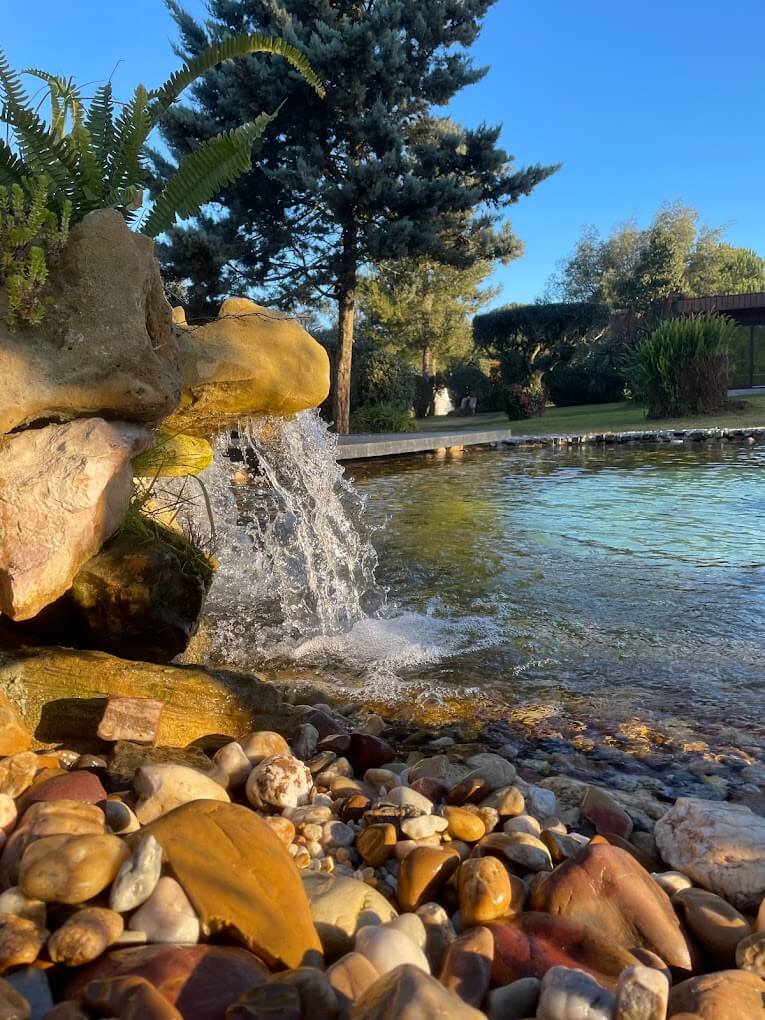
Stack flat stones or use a prefab spillway. Hide the pump hose behind the rocks. Use waterproof foam to direct water over the edge, not under your stones.
Add Pump and Water
Install the pump at the lowest point of the pond. Connect it to the waterfall or outlet hose. Fill the pond with water and turn the pump on. Watch the flow. Tweak it. Smile.
Add Finishing Touches
Place rocks and gravel to hide liner edges. Add marginal plants at the waterline. Include floating plants to reduce algae and provide shade. Leave space for sitting because you’re going to want to sit.
Best Plants for Garden Ponds and Waterfalls
Plants are more than decoration. They keep the ecosystem in balance. Here’s what works:
- Floating Plants: Water lettuce, or water hyacinth that are great for shade and oxygen.
- Marginals: Pickerel weed, marsh marigold, or iris live happily on the pond’s edge.
- Oxygenators: Hornwort, and anacharis help keep your water clean.
- Showstoppers: Water lilies and lotus. That’s the Instagram moment.
Mix plant heights and textures. Bonus: frogs and dragonflies will move in almost immediately.
Maintenance Tips for Healthy Garden Water Features
Water features aren’t high maintenance, but they do need a little love:
- Skim leaves weekly. Especially in autumn.
- Trim dead plant growth so it doesn’t sink and rot.
- Clean your pump every month or so. It’s the heart of the system.
- Top up water levels in hot weather.
- Add beneficial bacteria to fight algae (available at most garden centres).
Winter? Remove the pump if you’re in a freezing zone. Or keep water moving with a small bubbler to prevent ice.
Garden Ponds and Waterfalls vs Other Water Features
Why not a fountain? Or a birdbath?
You could go that route. But ponds and waterfalls offer more.
- Fountains are neat, compact, and low-maintenance, but they don’t support ecosystems.
- Birdbaths bring wildlife, but they’re dry by noon in summer.
- Streams need more space and planning. They are gorgeous but ambitious.
- Rills are modern and elegant but not exactly nature-rich.
Garden ponds and waterfalls hit the sweet spot. They’re immersive, calming, and wild enough to feel alive without needing a landscaping degree to manage.
Conclusion
Water transforms a space in ways that plants alone just can’t. It moves. It sparkles. It speaks quietly, but consistently.
A well-designed garden pond and waterfall brings more than beauty. It brings balance. It turns a garden into an experience. Into a place you use, not just look at from the kitchen window.
Whether you’re thinking of adding a small corner pond with a gentle cascade or going all in on a full backyard ecosystem, the steps are the same: start with the right plan, choose materials that last, and make sure your layout works with nature, not against it.
Need help designing a garden water feature that doesn’t turn into a maintenance nightmare or budget black hole? We create ponds and waterfalls that are beautiful, sustainable, and built to fit your lifestyle, not just your lawn.
Contact us today and let’s build the water feature your garden’s been waiting for.
FAQ
How to build a waterfall for a garden pond?
To build a waterfall, create a raised area behind the pond using rocks or a pre-formed waterfall structure. Install a pump in the pond that sends water to the top of the waterfall through tubing. Stack stones to direct flow, secure them carefully, and adjust water speed for natural sound and movement.
Is a garden pond a good idea?
A garden pond can be a great addition, offering wildlife habitat, relaxation, and visual interest. It can improve garden biodiversity and create a peaceful atmosphere. However, ponds require regular maintenance, such as algae control, plant management, and pump care. A well-planned pond is rewarding, but it’s not completely low-maintenance.
Are waterfalls good for ponds?
Yes, waterfalls are beneficial because they increase water circulation and oxygen levels, which supports fish health and reduces algae growth. Moving water also prevents stagnation and improves clarity. Waterfalls add aesthetic appeal and relaxing sound, but they do require a pump and regular cleaning to maintain proper flow.
Do ponds increase property value?
A well-designed pond can increase property value by enhancing visual appeal and creating a unique outdoor feature. Buyers often see ponds as desirable when they are attractive, safe, and low-maintenance. However, poorly maintained ponds can have the opposite effect. Good landscaping, filtration, and long-term upkeep make the biggest difference.