An irrigation system is any method designed to deliver water to plants in a controlled, efficient way from simple garden hoses to sophisticated automated networks that adjust watering schedules based on weather and soil moisture. In essence, irrigation replaces or supplements natural rainfall to ensure plants receive the water they need to thrive.
For homeowners in Portugal, where summer brings months of relentless heat and little to no rain, irrigation isn’t a luxury, it’s what keeps gardens alive. But not all irrigation systems are created equal. The right choice depends on your garden’s size, plant selection, water availability, and how much time and money you’re willing to invest in setup and maintenance.
This guide explains what irrigation systems are, the main types available for residential gardens, and how to choose the most appropriate option for Portugal’s climate and landscape.
Key Takeaways
- An irrigation system delivers water to plants systematically, replacing manual watering or supplementing rainfall in dry periods.
- The main residential types are drip irrigation, sprinkler systems, soaker hoses, and smart/automated systems that adjust based on weather or soil moisture.
- Drip irrigation is the most water-efficient option, delivering water directly to plant roots with minimal evaporation or runoff.
- In Portugal, summer water restrictions and hot, dry conditions make efficient irrigation essential. Wasteful systems aren’t just expensive, they’re increasingly restricted by law.
- Drought-tolerant landscaping and natural pools reduce or eliminate irrigation needs entirely once plants are established.
- The best irrigation system is the one matched to your plants, soil, and commitment to maintenance – there’s no universal solution.
A Smart Garden Deserves a Smart Water System
What Is an Irrigation System?
At its simplest, an irrigation system is any deliberate method of applying water to plants. This can be as basic as a garden hose and spray nozzle, or as complex as a fully automated network of underground pipes, sensors, and controllers that water different garden zones on independent schedules.
The purpose of irrigation is to:
Supplement or replace rainfall in periods when natural precipitation is insufficient for plant health.
Deliver water efficiently to where plants need it (the root zone) while minimizing waste through evaporation, runoff, or watering areas that don’t need it.
Maintain consistent moisture levels that support healthy growth, flowering, and fruiting, particularly important for lawns, vegetable gardens, and ornamental beds.
In climates like Portugal’s, where the majority of annual rainfall occurs between October and April and summers are reliably hot and dry, irrigation is essential for most conventional gardens. Native and drought-adapted plants require far less once established, but during the establishment period and for high-water-demand species, some form of irrigation is necessary.
Main Types of Irrigation Systems for Gardens
Residential irrigation systems fall into several broad categories, each with distinct advantages, limitations, and ideal use cases.
1. Drip Irrigation
How it works: Drip irrigation delivers water slowly and directly to the root zone of plants through a network of tubes, emitters, and drip lines laid on or just below the soil surface. Water seeps out at low pressure, typically 1 to 4 liters per hour per emitter, saturating the soil gradually without runoff.
Advantages:
- The most water-efficient system available – water goes directly to plant roots with minimal evaporation.
- Reduces weed growth by watering only where you want plants, not bare soil between them.
- Keeps foliage dry, reducing fungal disease risk.
- Can be automated with timers and moisture sensors.
- Adaptable to almost any garden layout – beds, containers, slopes, vegetable plots.
Disadvantages:
- Higher upfront installation cost than hoses or sprinklers.
- Requires periodic maintenance – emitters can clog with sediment or calcium deposits (common in Portugal’s hard water regions).
- Not ideal for lawns – better suited to beds, borders, and individual plants.
Best for: Vegetable gardens, ornamental beds, container plants, xerophytic landscaping, slopes, and areas with water restrictions.
Portugal-specific note: Drip irrigation is increasingly required by municipal water regulations during summer restrictions in many Portuguese towns. Its efficiency makes it the best choice for compliance with conservation mandates.
2. Sprinkler Systems
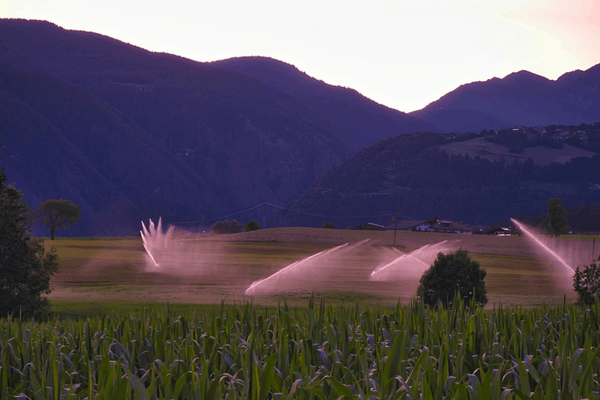
How it works: Sprinklers spray water through the air in a circular, oscillating, or rectangular pattern, simulating rainfall. They can be portable (attached to a hose and moved manually) or permanent (pop-up sprinklers installed underground and connected to an automatic system).
Advantages:
- Covers large areas quickly – ideal for lawns.
- Simple to install (portable types) or can be fully automated (in-ground systems).
- Provides even coverage when properly spaced.
Disadvantages:
- High water waste due to evaporation – particularly problematic in Portugal’s hot, dry summers when midday evaporation can exceed 50%.
- Wets foliage, increasing disease risk for some plants.
- Wind can disrupt spray patterns, leading to uneven watering.
- Not permitted during water restriction periods in many Portuguese municipalities.
Best for: Lawns, large open areas, sports fields. Less suitable for mixed ornamental gardens or water-conscious landscapes.
Portugal-specific note: Many regions restrict sprinkler use during summer due to evaporative water loss. Check local regulations before installing permanent systems.
3. Soaker Hoses
How it works: Soaker hoses are porous rubber or canvas hoses that “weep” water along their entire length when connected to a tap. They’re laid on the soil surface among plants and left in place throughout the season.
Advantages:
- Inexpensive and simple to install – no special tools or expertise needed.
- Delivers water directly to the root zone with minimal evaporation.
- Flexible layout – can weave between plants in beds and borders.
Disadvantages:
- Less precise than drip irrigation – water output isn’t evenly distributed, and you can’t control flow to individual plants.
- Prone to clogging in hard water areas (calcium buildup inside the porous material).
- Deteriorates over time when exposed to UV – needs replacing every few years.
- Water pressure affects performance significantly – too high and you get flooding, too low and nothing reaches the far end.
Best for: Small to medium ornamental beds, vegetable rows, informal plantings where precision isn’t critical.
Portugal-specific note: Soaker hoses work well for established drought-tolerant plants that need occasional deep watering but don’t require daily irrigation.
4. Smart/Automated Irrigation Systems
How it works: These systems integrate soil moisture sensors, weather data, or even satellite information to adjust watering schedules automatically. Controllers can delay watering if rain is forecast, skip cycles when soil is already moist, or increase duration during heatwaves.
Advantages:
- Maximum water efficiency – only waters when plants actually need it.
- Reduces over-watering and plant stress from inconsistent moisture.
- Saves time and effort – no manual intervention required.
- Can integrate with drip or sprinkler systems.
Disadvantages:
- Highest upfront cost among irrigation options.
- Requires reliable WiFi or cellular connection for cloud-based systems.
- More complex to install and troubleshoot than simple timers.
Best for: Homeowners who want minimal garden maintenance, large properties, and anyone committed to water conservation.
Portugal-specific note: Smart systems are particularly valuable in Portugal where summer water restrictions change annually based on drought severity. Automated compliance with municipal watering schedules (e.g., no watering between 8 AM and 8 PM) is easier than remembering to adjust manual timers.
5. Manual Watering (Hose and Watering Can)
How it works: You carry water to plants by hand using a hose, watering can, or bucket.
Advantages:
- No installation cost.
- Complete control over where and how much water each plant receives.
- Encourages regular observation of plants, catching problems early.
Disadvantages:
- Time-consuming and physically demanding, particularly for large gardens.
- Easy to over-water or under-water through inconsistency.
- Impractical for anyone who travels frequently or has limited mobility.
Best for: Small gardens, container plants on patios, vegetable plots where you’re already spending time daily, or as a supplement to automated systems.
Choosing the Right Irrigation System for Your Garden
The “best” system depends on several factors unique to your property and priorities.
1. Consider Your Plants
Lawns need frequent, even watering across large areas → sprinklers (where permitted) or pop-up systems.
Vegetable gardens and annual beds benefit from daily consistent moisture → drip irrigation or soaker hoses.
Drought-tolerant Mediterranean plants (lavender, rosemary, cistus, olive trees) need infrequent deep watering once established → drip on a timer, or manual watering every 1–2 weeks.
Container plants dry out quickly → drip emitters or hand watering.
2. Assess Your Water Source and Pressure
Drip systems require consistent but low pressure (1–2 bar). Sprinklers need higher pressure (2.5–4 bar). If your water pressure is inconsistent or very low, drip irrigation is more forgiving. If you’re using well water or harvested rainwater, drip systems maximize what you have.
3. Factor in Water Restrictions
In Portugal, summer water restrictions are routine in many areas. Municipal bylaws often prohibit sprinkler use during daylight hours or limit lawn watering to specific days. Drip irrigation is generally exempt or faces fewer restrictions because of its efficiency. Check your local câmara municipal regulations before committing to a system.
4. Budget for Installation and Maintenance
Drip irrigation: Moderate to high upfront cost, low water cost, moderate maintenance (cleaning emitters, replacing tubing every 5 to 7 years).
Sprinklers: Low (portable) to high (in-ground automated) upfront cost, high water cost, low maintenance.
Soaker hoses: Low upfront cost, moderate water cost, moderate maintenance (replacing hoses every 2–4 years).
Smart systems: High upfront cost, lowest long-term water cost, moderate maintenance.
5. Think About Your Time and Commitment
If you enjoy spending time in the garden and want direct involvement in plant care, manual watering or simple timer-controlled systems suit that approach. If you travel frequently, work long hours, or simply want the garden to manage itself, automation and smart systems are worth the investment.
Irrigation in Portugal’s Climate: What Works Best
Portugal’s Mediterranean climate creates specific challenges and opportunities for irrigation:
Hot, dry summers (June–September): Evaporation rates are extreme. Midday watering is wasteful. Water early morning (before 8 AM) or evening (after 8 PM) to minimize loss. Drip irrigation is far more efficient than sprinklers during this period.
Mild, wet winters (November–March): Most native and Mediterranean plants need little to no supplemental watering during this season. Turn off automated systems or reduce schedules significantly. Over-watering during winter causes root rot in drought-adapted species.
Spring (April–May) and autumn (October): Moderate temperatures and occasional rain. Irrigation needs are variable and smart systems that can adjust to actual conditions are ideal.
Regional variation: Coastal areas (Algarve, Costa Vicentina) receive less rainfall than northern and inland regions. Alentejo’s plains face more extreme heat. Tailor your system to your microclimate, not just general “Portugal” advice.
Reducing Irrigation Needs Through Design
The most sustainable irrigation system is the one you barely need to use. Thoughtful landscape design dramatically reduces water dependence:
Choose drought-tolerant plants. Native and Mediterranean species (lavender, rosemary, cistus, cork oak, olive) require minimal irrigation once established. Reserve high-water plants for small, focal areas.
Mulch generously. A 5–10 cm layer of organic mulch or gravel over soil reduces evaporation by up to 70%, keeps roots cool, and suppresses weeds.
Improve soil structure. Clay soils hold water but drain poorly. Sandy soils drain fast but don’t retain moisture. Amend with compost to improve both drainage and water retention.
Group plants by water needs. Don’t scatter high-water annuals throughout a drought-tolerant landscape. Cluster them in dedicated beds where you can irrigate efficiently without wasting water on plants that don’t need it.
Use shade strategically. Trees, pergolas, and shade sails reduce evaporation and lower ambient temperatures, meaning plants need less water.
Natural Pools and Irrigation: A Different Relationship
Natural pools, with their planted regeneration zones and biological filtration, create a unique relationship with irrigation. The aquatic plants in the regeneration zone are self-watering by design (their roots are in water), and the microclimate around a natural pool tends to be cooler and more humid than open garden areas.
Surrounding landscaping near natural pools often requires less irrigation than elsewhere in the garden because of this ambient moisture. Drought-tolerant Mediterranean plants positioned around the pool perimeter can thrive on rainfall alone once established, with the pool’s presence providing just enough humidity to buffer them through the hottest weeks.
This is one of the understated advantages of natural pool design: the ecosystem you create for water filtration also creates conditions that reduce your overall garden’s water needs.
Oásis Biosistema integrates irrigation planning into every landscape design we create, whether for natural pools, ornamental ponds, or drought-tolerant gardens. We match irrigation systems to plant selection, local water availability, and maintenance preferences to create landscapes that are both beautiful and genuinely sustainable. Get in touch to discuss your project.
Conclusion
An irrigation system is simply a method of delivering water to plants efficiently and consistently. The right system for your garden depends on what you’re growing, your local climate and water regulations, your budget, and how involved you want to be in daily garden management.
In Portugal’s hot, dry summers, efficient irrigation isn’t optional for most conventional gardens, but through thoughtful plant selection, mulching, and strategic design, you can reduce water needs dramatically and create a landscape that thrives with minimal intervention.
Whether you choose drip irrigation for precision, smart systems for automation, or design your garden around drought-tolerant plants that barely need watering at all, the goal is the same: a garden that flourishes without waste, stress, or constant effort.
FAQ
What is the definition of an irrigation system?
An irrigation system is a method of supplying water to land, plants, or crops artificially. It delivers water through pipes, hoses, sprinklers, or drip lines to ensure plants receive consistent moisture, especially in areas with little or irregular rainfall.
What is an irrigation system for a home?
A home irrigation system is a setup that waters your garden or lawn automatically or manually. It usually includes pipes, valves, timers, and sprinklers or drip lines, helping homeowners maintain healthy plants while saving time and using water efficiently.
How does an irrigation system work?
An irrigation system works by moving water from a source through pipes and distributing it to plants using sprinklers, drip emitters, or hoses. Timers or controllers can automate watering, ensuring plants receive the right amount of water at scheduled times.
Is an irrigation system the same as a sprinkler system?
A sprinkler system is one type of irrigation system, but not all irrigation systems use sprinklers. Irrigation includes methods like drip irrigation, soaker hoses, and surface watering, while sprinklers specifically spray water over an area like rainfall.
What is the 30–30 rule for irrigation?
The 30–30 rule typically means watering for about 30 minutes, twice a week, depending on soil and climate. It encourages deep watering rather than frequent shallow watering, helping roots grow deeper and making plants more drought-resistant.
What type of irrigation is best for a garden?
Drip irrigation is often the best choice for gardens because it delivers water directly to plant roots, reducing waste and evaporation. It is efficient, conserves water, and helps prevent weeds and diseases caused by excess moisture on leaves.
What is the best irrigation for dahlias?
Dahlias grow best with drip irrigation or a soaker hose, which keeps soil consistently moist without wetting the leaves. This reduces the risk of fungal diseases while ensuring deep watering that supports strong root and flower development.
Which is better, soaker hose or drip irrigation?
Drip irrigation is generally more precise and efficient, delivering water directly to each plant. Soaker hoses are simpler and cheaper but less controlled. For larger or more structured gardens, drip systems are usually better, while soaker hoses work well for smaller beds.