
Water should be as pure as nature intended. Sounds simple. But take a look at most pools.
Chlorine. Chemicals. Pumps that hum like a small power plant. All of it, just to maintain a body of water that’s used for maybe three months a year.
There’s a better way. And in Portugal, more and more people are finding it.
Natural swimming pools (organic or biological pools) are quietly becoming one of the most sought-after alternatives to traditional swimming pools. In fact, interest in these systems has grown by more than 60% across Europe in the past three years.
Why? Because they look stunning. Think alpine lake, not plastic basin. But they also work. They clean themselves with plants and gravel filtration, not chemicals. And long term, they’re cheaper to maintain.
This isn’t about jumping on a trend. It’s about rethinking what a pool can be and what it should not require to stay clean, safe, and usable year after year.
In this guide, we’ll break down how they work, what they cost, whether they make sense for your space, and what you really need to know before you build one in Portugal.
Spoiler: once you see what’s possible, it’s hard to look at a regular pool the same way again.
Key Takeaways
- Natural pools use plants and biological filters instead of chemicals
- They include two zones: one for swimming and one for filtration
- Designs range from rustic and wild to clean and modern
- Typical build cost in Portugal ranges from €50,000 to €150,000
- Maintenance is low and similar to caring for a garden
- They are more eco-friendly and cost-effective long term than conventional pools
- Ideal for rural or off-grid properties, but possible in small urban gardens
- Pools need sunlight, space and good drainage to work effectively
- They increase property value and create a peaceful outdoor retreat
What Is a Natural Pool and How Does It Work?
Let’s start with what it’s not.
It’s not a standard pool with fewer chemicals. It’s not a pretty pond you happen to swim in. And no, it’s not just for eco-hippie retreats in the middle of nowhere.
A natural or biological pool is a fully swimmable body of water that stays clean without chlorine, salt, or chemical filters. Instead, it uses plants and a biological filtration system to purify the water naturally.
Here’s how it works:
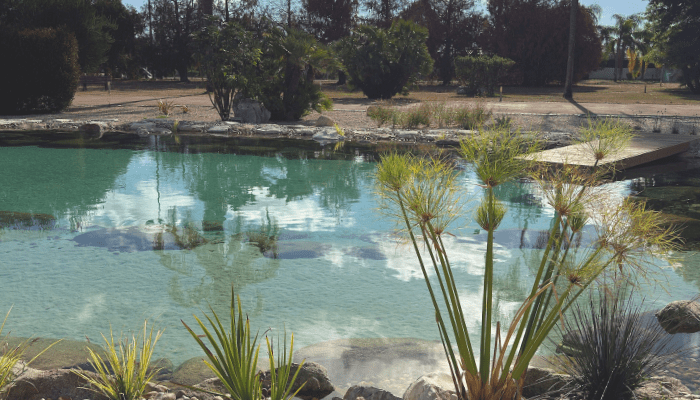
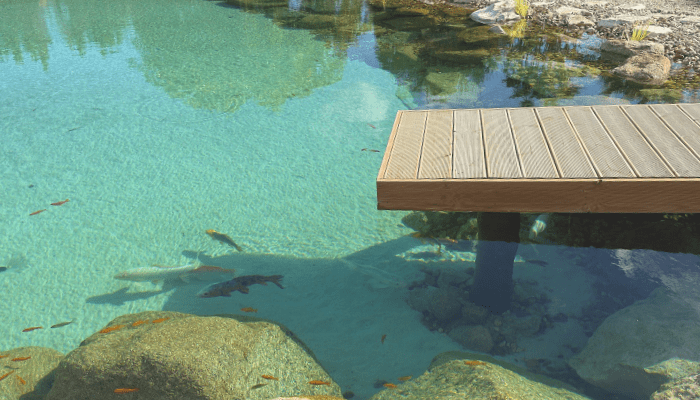
There are typically two zones. One is for swimming. The other is the regeneration zone, where plants, gravel, and beneficial bacteria break down impurities and keep the water clean. Water flows between the two areas, either through a gentle current or gravity, depending on the setup.
You swim. The plants are clean. It’s a partnership, not a fight against nature.
And no, the water doesn’t smell. It doesn’t turn green (unless something’s very wrong). And it doesn’t feel like a muddy pond. It feels like fresh, clean water, because it is.
Benefits of Natural Pools
The first benefit is obvious: no chemicals. That means no red eyes, no chlorine-scented towels, and no long-term skin irritation for people with sensitivities.
But it goes deeper.
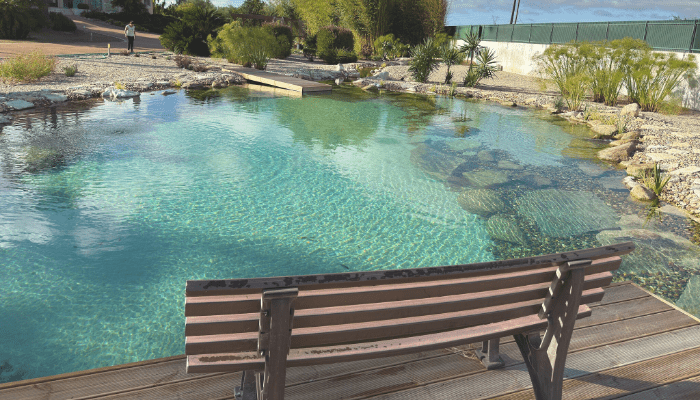
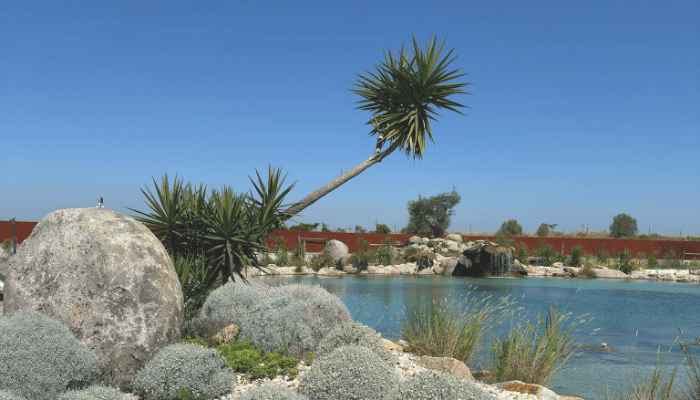
They’re stunning. Natural pools don’t try to look artificial. They blend into the landscape. Think soft edges, stone surrounds, lush plant zones, and water that reflects the sky like a mirror.
They’re sustainable. Once established, a natural pool uses far less energy and water than a conventional one. No draining every season. No weekly trips to the pool supply store. Just seasonal maintenance and biological balance.
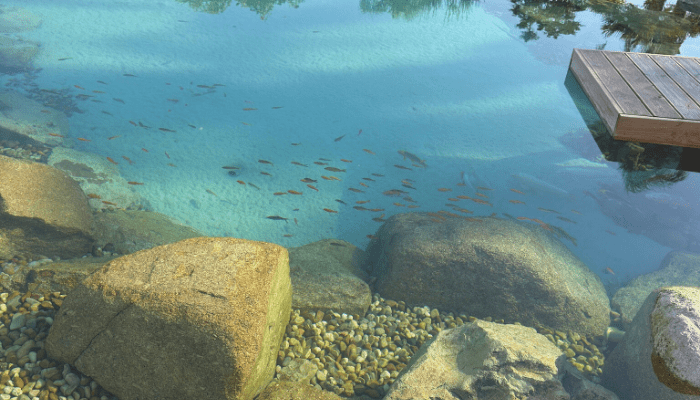
They’re good for biodiversity. Birds drink from it. Dragonflies hover. Frogs show up. You’re not just installing a pool, you’re creating a small, balanced ecosystem.
They add value. Not just real estate value, but emotional value. A natural pool becomes a feature you enjoy, talk about, and feel proud of.
And maybe best of all: you can use it more often. Because the water doesn’t depend on chemical levels to stay safe, it’s often usable more days of the year, especially in Portugal’s mild climate.
How Much Does a Natural Pool Cost in Portugal?
This is where everyone leans in. So let’s get into it.
For a professionally built natural pool in Portugal, expect to invest somewhere between €15,000 and €50,000, depending on size, complexity, terrain, and features.
Yes, that’s a wide range. Here’s what drives the cost up or down:
- Size matters. Bigger pool, bigger filtration zone, more excavation, more plants.
- Terrain complexity. Flat land is cheaper. Slopes, rocks, or difficult access? The price climbs.
- Materials used. Natural stone, high-end liners, custom decking are all beautiful, all extra.
- Pumps and circulation systems. Some natural pools use solar, others go off-grid entirely. That choice affects the budget.
- DIY vs. turnkey. Handy with tools? Some people save money by building parts themselves, especially the regeneration zone.
In most cases, a natural pool costs about the same upfront as a traditional pool, but much less to maintain over time. Fewer chemicals. Less energy. No need to drain or refill every year. And almost no running costs if you design it with passive systems.
Want to build your own? It’s possible but risky. A poorly balanced system can become a green mess. So unless you’re confident in water engineering, bring in the pros.
Is a Natural Pool Right for Your Property?
Natural pools are flexible but not magic.
They work best when you have:
- At least 40 to 60 square meters to work with
- Sunlight for at least 6 hours a day (your filtration plants need it)
- Good drainage or the ability to shape terrain
- A vision for integration because these pools are meant to be part of your landscape, not dropped into it
If you’re on a rural property, off-grid land, or a quinta-style home, you’re in the ideal zone. But urban gardens can still make it work, especially with clever design like vertical filtration beds or built-in retaining walls.
You’ll need to check local regulations, of course. Portugal is relatively open to natural pools, but zoning laws, water use rights, and protected area rules still apply in some places. If in doubt, talk to your local municipality or an experienced builder.
Maintenance: Easier Than You Think
Here’s the surprise: natural pools are not high maintenance. But they do need attention.
Instead of shocking the water or measuring chlorine, you’re watching for balance.
What that looks like:
- Trimming plants in the regeneration zone once or twice a year
- Cleaning sediment from the swimming zone if needed
- Checking water flow through the filter zone
- Removing debris like leaves before it sinks
- Monitoring algae levels and adjusting sunlight or circulation if they spike
That’s it.
In winter, the plants die back and the system slows down. No draining. No pool covers. Just let it rest and bounce back in spring.
It’s more like maintaining a garden than managing a pool. And once you get the rhythm, it’s simple.
Design Inspiration: From Rustic to Ultra-Modern
This is where you get to be creative.
Natural pools don’t all look the same. In fact, the best ones don’t look like pools at all.
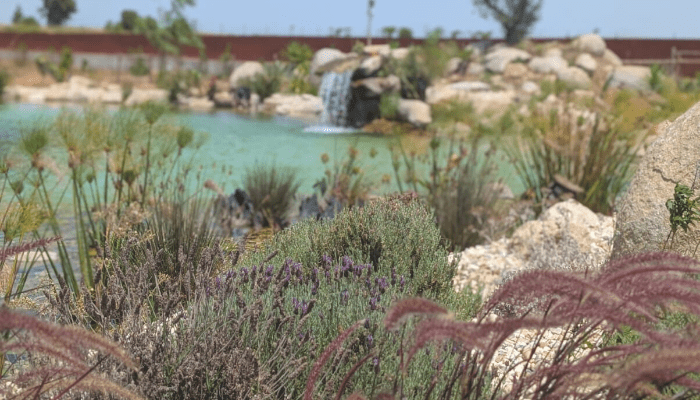
You can go rustic, with irregular stone edges, wildflowers, and a layout that feels more like a forest pond.
Or Mediterranean, with clean lines, terracotta paths, olive trees, and warm stone.
Or go full modern minimalism with square shapes, underwater steps, and a planted regeneration zone that’s invisible from the house.
Want to combine a natural pool with a deck or pergola? Easy. Prefer a small plunge-style pool for a narrow garden? It’s doable.
The key is to design for your climate, your land, and your style, not someone else’s Pinterest board.
Are Organic Pools Worth It?
If you’re looking for convenience only, probably not.
If you’re focused on long-term sustainability, visual impact, personal health, and creating something that actually improves your land, then yes. It’s absolutely worth it.
Especially in Portugal, where warm seasons are long, natural light is generous, and rural properties are abundant. A natural pool fits the climate. It fits the lifestyle. And it fits the growing movement toward self-sufficiency and regenerative living.
It’s not for everyone. But for the right property and the right mindset it might be the best outdoor upgrade you ever make.
Conclusion: Organic Pools in Portugal
A biological pool isn’t just a luxury. It’s a mindset shift.
It says: I want water that doesn’t smell like a chemistry experiment. I want something that fits into the landscape, not something that fights against it. I want a space that invites nature in, not one that tries to sterilize it.
Yes, a natural pool takes planning. Yes, it requires the right space, the right setup, and a bit of patience in the first year. But what you get in return isn’t just a swimming area.
You get a living ecosystem. You get a quiet refuge. You get a feature that adds value to your home and calmness to your life.
And no more chlorine in your eyes, your skin, or your laundry.
If you’re in Portugal and thinking about building a pool, now is the perfect time to go natural. Whether you’re off-grid in the Alentejo or redesigning a quinta in the North, a biological pool could be the most beautiful decision you make this year.
Take the plunge. Just not into chlorine.
FAQ
How much does it cost to make an organic pool?
Building an organic or “natural” pool typically costs $30,000–$80,000, depending on size, filtration system, landscaping, and construction materials. These pools use plants and biofilters instead of chlorine, so maintenance costs are generally lower. Initial construction is higher than a standard pool, but long-term operating costs are often reduced.
How much does it cost for a natural swimming pool?
A natural swimming pool usually ranges from $50,000 to $100,000, depending on design complexity, regeneration zones, and excavation. More elaborate plant filtration areas increase cost, while simpler layouts are more affordable. Although the upfront investment is higher, natural pools avoid chemical expenses and can be more sustainable over time.
Are natural pools cheaper than inground pools?
Natural pools often cost more upfront than traditional inground pools due to the need for regeneration zones and biological filtration. However, they are cheaper to maintain, as they don’t require chlorine, pH stabilizers, or chemical treatments. Over several years, the total cost of ownership can be lower for natural systems.
What is the cheapest type of pool to build?
The cheapest type of pool to build is typically an above-ground pool, especially soft-sided or steel-frame models. For inground options, vinyl-liner pools are generally the least expensive due to lower material and installation costs. Concrete and natural pools are higher-end options with significantly higher initial investment.