No one enjoys marinating in a cocktail of chlorine, algaecide, and mystery chemicals every time they take a dip. But for decades, that’s been the status quo. Harsh additives. Red eyes. That lingering “public pool” smell baked into your skin.
But things are changing fast.
More homeowners are looking for alternatives that don’t just look clean but are clean without the chemical sting. In fact, over 40% of new pools in parts of Europe are now designed with natural filtration in mind. That’s not just a trend; it’s a shift in thinking. People are waking up to the idea that a beautiful pool doesn’t have to come with a side of chlorine rash.
Natural pool treatment isn’t just a niche idea for permaculture fans or people with koi ponds. It’s a highly effective, science-backed approach to water care that uses plants, beneficial bacteria, and simple mechanical circulation to maintain a crystal-clear pool. Not green. Not slimy. Not frog-infested (unless you’re into that).
Imagine a pool where filtration happens through reeds, gravel, and good bacteria—not plastic jugs of bleach. Where you can swim without worrying about what’s soaking into your skin. Where your kids aren’t ingesting microdoses of chlorine every time they open their mouths underwater. That’s not fantasy, it’s actually very doable. And it’s surprisingly low maintenance once set up properly.
Most people are shocked to learn that natural pools don’t require constant testing, shocking, or pH-chasing. With the right treatment strategy rooted in natural processes, you can prevent algae, balance nutrients, and maintain clean, swimmable water all season long. In fact, many natural pool owners report spending less time and money on upkeep than when they ran chlorine systems.
So what’s the catch?
There really isn’t one.
You just need to understand the fundamentals: how to create biological balance, how to circulate water efficiently, and how to use targeted natural treatments (like beneficial bacteria or phosphate removers) when needed. There’s no one-size-fits-all formula but there are clear principles that work.
You don’t need a background in aquatic biology to get this right. You need solid guidance, a few core tools, and a willingness to think beyond the pool store aisle. And once you make the switch, it’s hard to go back.
Sure, traditional pools sparkle. But they sparkle like a freshly waxed car that runs on diesel. Natural pools? They sparkle like a spring-fed lake on a clear morning. Subtle. Quiet. Alive.
Whether you’re building a natural pool from scratch or trying to transition away from chemicals in an existing one, you’re in the right place. This guide walks you through exactly what natural pool treatment is, how it works, which solutions are effective, and how to troubleshoot issues without reaching for toxic additives. No fluff. No pseudoscience. Just clean water, naturally.
By the end, you’ll understand the difference between managing a chemical reaction and supporting a living ecosystem. And we’ll make sure you’re set up for success whether you want to DIY it or bring in the pros.
Let’s dive in. (Had to say it once.)
Swim in Water That Feels Alive
Key Takeaways
- Natural pool treatment uses biology, not chemicals, to keep water clean.
- Plants, beneficial bacteria, and circulation are the core systems.
- Phosphate control is key to preventing algae naturally.
- Regular maintenance is low-effort but essential for balance.
- Chlorine pools can be converted gradually using natural alternatives.
- UV and mineral systems offer additional support for cleanliness.
- Cleaner water doesn’t mean more work, just smarter habits.
What Is Natural Pool Treatment?
Natural pool treatment is a method of keeping your swimming pool clean, clear, and safe to swim in without dumping in chlorine or other synthetic chemicals. Instead of shocking the water, you’re supporting it. Think of it less like a disinfected bathtub and more like a living, breathing pond with boundaries. It’s water care based on biology, not bleach.
At its core, a natural pool operates using biological filtration. That means no chlorine floaters or chemical test strips. Instead, natural pools rely on plants, beneficial bacteria, oxygen, and movement. These elements work together to create a balanced ecosystem that keeps harmful microbes in check while supporting a healthy, swimmable environment. When done right, they’re just as clear as a traditional pool, minus the chemical burn.
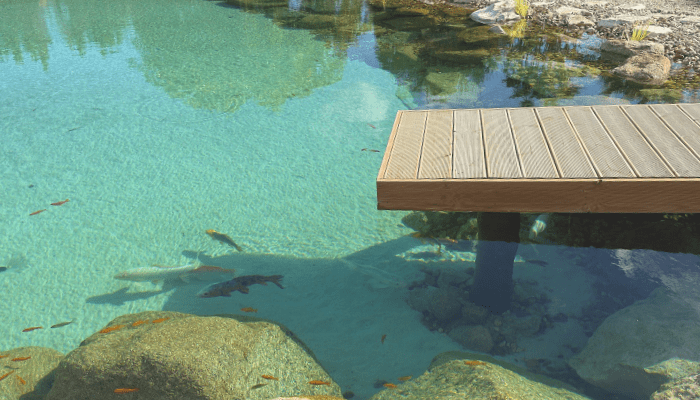
Natural treatment can be used in two types of pools: ones that are built from the ground up as natural swimming ponds, and converted traditional pools that adopt some of the same principles. While a fully planted regeneration zone is ideal, many existing pools can still benefit hugely from natural treatment systems like mineral-based purifiers, enzyme treatments, or UV filtration.
How Natural Pools Stay Clean Without Chemicals
Let’s clear something up: natural doesn’t mean dirty. It means balanced. And that balance comes from a few key systems working together:
Biological Filtration
This is the heart of a natural pool. Water flows through a gravel bed planted with aquatic vegetation. As it passes through, good bacteria living in the gravel break down organic matter, just like in a wetland. The plants help too, absorbing nutrients that would otherwise feed algae.
Circulation and Oxygenation
Stagnant water is bad news. You need flow. Pumps keep water moving through the filtration zone and back into the swimming area, while surface skimmers help reduce debris. Oxygenation is critical too. Whether it’s from a waterfall, a bubbler, or an aerator, oxygen keeps microbial life active and efficient.
UV and Mineral Systems
Some natural pools use supplemental technologies like ultraviolet sterilizers or copper-silver ionizers to help control bacteria levels. These are optional, but useful, especially in converted pools without full plant zones. They reduce reliance on chemicals while giving you a safety net.
Natural Pool Treatment Methods (Step-by-Step)
Step 1: Balance Nutrients
The number one cause of algae in natural pools? Excess nutrients, especially phosphates. These come from leaves, fertilizer runoff, even tap water. Use a natural phosphate remover to bind and remove them. Less food for algae = less algae.
Step 2: Introduce Beneficial Bacteria
These bacteria do the heavy lifting. They digest organic debris before it can decompose and cloud your water. You can kickstart the process by adding a natural bacteria supplement, especially early in the season or after cleaning.
Step 3: Clarify Naturally
If your water looks murky, you don’t need chemical flocculants. Products made from chitosan (a natural polymer from crustacean shells) bind particles together so they can be filtered out or sink to the bottom for easy vacuuming.
Step 4: Maintain Strong Circulation
Run your pump enough to circulate the entire volume of water daily. If you have a plant zone, water should flow slowly through it before returning to the swim area. Dead zones = algae zones.
Step 5: Clean Debris Regularly
Even the best systems can’t handle a load of leaves and bugs. Use a skimmer net, vacuum the bottom as needed, and keep nearby trees trimmed. Prevention is easier than restoration.
Regular Maintenance Schedule
Natural doesn’t mean no maintenance. It just means smarter maintenance. Here’s what to expect.
Weekly
- Skim surface debris
- Empty pump baskets
- Check pump and skimmer operation
Monthly
- Trim aquatic plants (if you have a regeneration zone)
- Add beneficial bacteria as needed
- Rinse filter media (if using)
Seasonally
- Deep clean the gravel bed
- Remove sediment buildup
- Add new plants or thin overgrowth
- Test pH and alkalinity (natural pools like a pH around 7.0–7.5)
You don’t need to be obsessive, just consistent. Most issues come from neglect, not complexity.
Common Problems and How to Fix Them
Cloudy Water
Could be poor circulation, not enough bacteria, or suspended particles. Check flow first. Then boost biological activity with a bacteria dose and add a natural clarifier.
Green Tint
This might be mineral-related. Iron in well water can tint the pool green. Use activated carbon or a natural metal remover.
Algae
Algae thrives on phosphates. Starve it. Remove debris, reduce nutrient input, and use a phosphate remover that doesn’t harm plants or microbes.
Mosquitoes
If the water isn’t circulating properly, mosquitoes may take it as an invitation. Improve flow and consider adding mosquito-eating fish like gambusia if appropriate.
Should You Convert a Chlorine Pool Into a Natural Pool?
Absolutely. And no, it doesn’t mean bulldozing your backyard and planting a swamp. You can start small. Replace chemical treatments with natural alternatives. Introduce bacteria and enzymes. Upgrade your filtration system. Consider adding a small planted zone, even in a side basin or overflow area.
You can go full transformation or partial conversion. Even modest changes can lead to dramatic improvements in water quality, comfort, and long-term cost.
Bonus Tips for Cleaner Water Year-Round
- Install a pre-filter on your hose to reduce metals and phosphates in fill water
- Avoid using fertilizers or pesticides near your pool zone
- Choose native plants for regeneration areas, they’re easier to maintain
- Shade parts of the pool to reduce water temperature and algae growth
- Observe your water changes in smell, color, or clarity mean it’s time to act
Conclusion
You made it this far, which tells us something important: you care about what goes into your pool and your body. That alone puts you ahead of the curve. The good news? You don’t need a lab coat or a pond full of lilies to make natural pool treatment work. You just need clarity, a plan, and a few smart practices.
Natural treatment isn’t about neglect. It’s about supporting balance rather than fighting symptoms. When you give your pool what it needs to stabilize like oxygen, movement, microbial life, plant-based filtration, it becomes surprisingly self-regulating. Yes, there’s still upkeep. But it’s maintenance rooted in stewardship, not chemical warfare.
From using beneficial bacteria to reduce organic waste, to deploying natural flocculants that clarify water without harming wildlife, the tools are all there. And they’re affordable. They’re safer. And they’re effective if used with intention.
A natural pool doesn’t mean giving up control. It means switching from micromanaging to managing wisely. No more Sunday water tests and emergency shock treatments. Just a living system that works with you, not against you.
And it’s not all or nothing. You can make gradual changes. Start by cutting back on chlorine. Add a few aquatic plants to your filtration area. Introduce bacteria-based treatments instead of harsh algaecides. One change at a time builds toward a sustainable, low-intervention system.
Remember, your pool isn’t just a water feature, it’s a micro-ecosystem. How you treat it affects your health, your family, and your environment. There’s power in choosing solutions that align with nature instead of disrupting it.
Ready to take the next step?
If you’re building a natural pool, need help transitioning your chemical pool, or just want support choosing the right natural treatments, we’re here. Our team specializes in custom natural pool planning, water testing, product recommendations, and conversion strategies that work in real-life backyards, not just Pinterest boards.
So reach out.
Ask questions.
Let’s work together to make your pool healthier, safer, and easier to manage naturally.
No chlorine clouds. No second-guessing. Just clean, clear water the way nature intended.
FAQ
Is there a natural alternative to chlorine in a pool?
Yes, natural alternatives to chlorine include saltwater chlorination, mineral systems, UV systems, and ozone generators. These reduce harsh chemical levels and provide gentler water while still controlling bacteria and algae. They require proper maintenance and filtration to stay effective, but many pool owners prefer them for softer, less irritating water.
How to treat a pool without chemicals?
A pool can be treated without traditional chemicals using a combination of UV purification, ozone systems, high-quality filtration, saltwater chlorination, and regular brushing. Maintaining balanced pH and consistent circulation is essential. While “chemical-free” pools still require sanitation, these systems significantly reduce reliance on harsh chlorine products.
What does vinegar do to pool water?
Vinegar can temporarily lower pH in pool water, but it is not a safe or effective treatment method. Because it adds organic material, it can actually encourage algae growth and increase the chlorine demand. Pools require balanced pH and proper sanitation, which vinegar cannot provide reliably.
Will vinegar keep pool water clean?
No, vinegar will not keep pool water clean. It does not kill bacteria or remove algae, and it can disrupt water balance. Maintaining clean pool water requires effective filtration and a sanitizer like chlorine, bromine, UV, ozone, or mineral systems. Vinegar should only be used for cleaning surfaces, not treating the water.