Pool maintenance has a way of quietly stealing your time. Household maintenance tasks take up an average of six hours per week, and pools are among the most time-consuming features to maintain when the right systems are not in place. That time adds up fast, especially when cleaning turns into a constant cycle of skimming, vacuuming, and troubleshooting equipment that promised to “do it all.”
This is why the search for the best swimming pool cleaner is not about chasing the newest gadget. It is about reducing effort without compromising water quality. The reality is that not all pool cleaners are built for the same conditions. Some excel with fine dust but struggle with leaves. Others look powerful until they meet an uneven surface or a heavy debris load. Choosing the right one means understanding your pool’s size, surface, and surrounding environment before you look at price tags or brand names.
In this guide, we focus on real performance. You will learn what actually matters when comparing swimming pool cleaners, which features justify their cost, and where buyers often overpay for convenience that does not last. The goal is simple: fewer hours spent maintaining your pool and more time enjoying it, without unnecessary complexity or frustration.
Key Takeaways
- The best swimming pool cleaner depends on debris type, pool size, and surface, not price alone.
- Robotic pool cleaners offer the most thorough cleaning with the least manual effort.
- Cordless cleaners work best for small pools with light debris and simple layouts.
- Heavy leaf environments may require pressure-side cleaners for consistent performance.
- Proper pool design and landscaping significantly affect how well any cleaner performs.
- Consistent cleaning improves water quality and reduces long-term chemical use.
Why Clean When Your Pool Can Clean Itself?
How We Chose the Best Swimming Pool Cleaners
Pool cleaners fail for predictable reasons. They are underpowered for the debris load, mismatched to the pool surface, or designed for convenience rather than durability. To avoid that trap, this list prioritizes cleaners that perform consistently in real-world conditions, not just ideal ones.
We focused on cleaning coverage, debris handling, filtration quality, reliability over time, ease of maintenance, and how much manual intervention is still required after a cleaning cycle. We also considered energy use and whether the cleaner actually reduces overall pool maintenance rather than shifting the workload elsewhere.
Types of Swimming Pool Cleaners
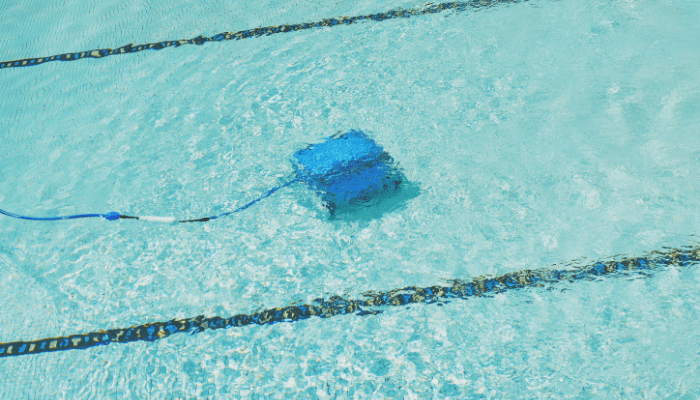
Robotic pool cleaners dominate for good reason. They operate independently of your pool pump, offer stronger filtration, and provide the most thorough cleaning with the least effort. Suction and pressure-side cleaners still have their place, especially in simpler pools or where budget is a priority, but they rely more heavily on the pool’s existing systems and usually require more supervision.
Cordless robotic cleaners are growing fast, but battery limitations mean they are best suited for smaller pools or lighter debris loads. Power matters more than convenience once leaves and fine sediment enter the picture.
Best Swimming Pool Cleaner Overall
Dolphin Premier
The Dolphin Premier remains one of the most balanced pool cleaners available. It handles large debris and fine particles equally well, cleans floors and walls effectively, and offers multiple filtration options depending on what your pool collects most often. It is not flashy, but it is reliable, which matters far more after the novelty wears off.
This cleaner works best for medium to large residential pools with mixed debris. Maintenance is straightforward, and replacement parts are widely available, which makes long-term ownership far less painful than it sounds.
Best Robotic Pool Cleaner for Large Pools
Polaris Alpha iQ+
Large pools demand endurance, coverage, and intelligent navigation. The Polaris Alpha iQ+ delivers on all three. Its mapping system reduces wasted movement, and its suction power handles leaves without choking halfway through the cycle.
This cleaner is ideal for pools over 12 meters long or those surrounded by trees. The app control is genuinely useful rather than decorative, allowing cycle adjustments without standing poolside pretending to enjoy tech demos.
Best Cordless Swimming Pool Cleaner
Wybot C2
Cordless cleaners often sacrifice power, but the Wybot C2 manages a reasonable balance. It is best suited for smaller pools or environments with low debris. Battery life is sufficient for standard cleaning cycles, and setup is refreshingly simple.
This is a good choice if cords are a genuine obstacle or if the pool is used lightly. It is not built for heavy leaf loads or irregular shapes, but within its limits, it performs consistently.
More details can be found directly at the official website.
Best Swimming Pool Cleaner for Fine Dirt and Algae
Maytronics Dolphin Nautilus CC Plus
Fine debris exposes weak filtration fast. The Nautilus CC Plus excels here thanks to its fine filter system and strong suction. It removes dust and sediment that many cleaners leave behind, which makes a noticeable difference in water clarity over time.
This cleaner is especially effective in pools where water appears clean but never quite looks right. That haze is usually fine debris, not chemistry.
Best Pool Cleaner for Leaves and Heavy Debris
Polaris 3900 Sport
Heavy debris still favors pressure-side cleaners in certain conditions. The Polaris 3900 Sport is powerful, aggressive, and unapologetically mechanical. It handles leaves, acorns, and larger debris without hesitation.
This cleaner requires a booster pump, which increases energy use, but in leaf-heavy environments, it can outperform robots that clog too easily. It is a specialist, not a generalist, and should be treated as such.
Best Budget Swimming Pool Cleaner
Hayward Navigator Pro
The Hayward Navigator Pro proves that budget does not have to mean disposable. It is simple, durable, and effective in pools with manageable debris levels. It relies on the pool’s filtration system, which means performance depends heavily on pump quality and plumbing.
This cleaner is best for smaller pools with consistent maintenance routines. It is not hands-off, but it is predictable, which is often more valuable.
Robotic vs Suction vs Pressure Cleaners in Real Use
Robotic cleaners win on independence and filtration. They reduce strain on pool pumps and usually provide the cleanest result. Suction cleaners are affordable and mechanically simple but shift workload to your filtration system. Pressure cleaners are powerful but energy-hungry and increasingly niche.
If your pool collects fine debris or you want minimal involvement, robotic is the safest choice. If debris is heavy and organic, pressure-side still deserves consideration. If the budget is tight and the pool is simple, suction can work with realistic expectations.
What Most Buyers Get Wrong When Choosing a Pool Cleaner
Pool size alone is not enough. Debris type matters more. A cleaner that performs beautifully in a clean suburban pool may fail completely in a landscaped environment with trees and wind exposure.
Another common mistake is overvaluing smart features. Apps are useful, but suction power, filtration quality, and mechanical reliability matter more over time. Lastly, buyers often underestimate maintenance. Every cleaner needs care. The best ones simply need less of it.
Pool Cleaners and Water Quality
Consistent debris removal directly affects chemical demand. Organic material consumes sanitizers and destabilizes water balance. According to the Centers for Disease Control and Prevention, proper pool maintenance reduces the formation of harmful disinfection byproducts and improves swimmer comfort.
A good cleaner does more than improve appearance. It supports healthier water with fewer chemical corrections, which saves money and improves the swimming experience.
How Landscaping and Pool Design Affect Cleaner Performance
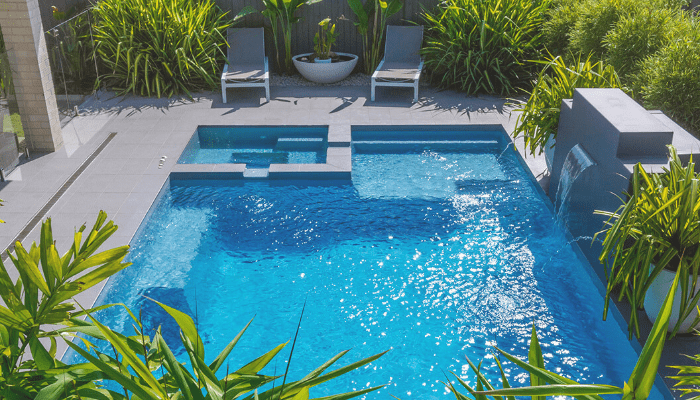
This is rarely discussed, but it matters. Pools surrounded by poorly planned landscaping collect more debris than any cleaner can comfortably handle. Water features, overflow edges, and circulation patterns also influence where debris settles.
Designing pools and surrounding spaces to work with cleaning systems reduces long-term effort dramatically. Cleaners perform best when they are part of a coherent design strategy, not a last-minute fix.
Conclusion
The best swimming pool cleaner is the one that fits your pool, not the one with the loudest marketing. When cleaner selection aligns with pool design, circulation, and debris type, maintenance becomes predictable instead of reactive. Water stays clearer, chemical use drops, and equipment lasts longer. That outcome is not accidental. It is the result of treating the pool as a complete system rather than a collection of accessories.
At Oásis Biosistema, we apply this systems-based thinking to everything we build. From natural swimming pools that rely on biological balance, to traditional pools and integrated landscaping that reduce debris and improve circulation, our work is designed to support cleaner water with less ongoing effort. A well-chosen pool cleaner plays an important role, but it performs best when the surrounding environment is designed intelligently.
If you are planning a new pool, upgrading an existing one, or looking to reduce maintenance without sacrificing water quality, visit our website to explore how thoughtful pool design, landscaping, and cleaning strategies work together. The right approach does not just clean your pool. It changes how often you have to think about it.
FAQ
What is the best pool cleaner on the market?
The best pool cleaner depends on pool type, but robotic cleaners are widely considered the top choice. They scrub floors and walls, filter fine debris, and work independently from the pool system. High-quality robotic cleaners offer excellent cleaning performance, energy efficiency, and minimal manual effort.
How do I get my pool crystal clear?
To get a pool crystal clear, maintain proper water chemistry, run the filter long enough each day, and remove debris regularly. Brush walls, vacuum the floor, clean the filter, and shock the pool when needed. Balanced chlorine, pH, and circulation are essential for clear, healthy water.
Are cordless pool vacuums worth it?
Yes, cordless pool vacuums are worth it for quick, convenient cleaning of small to medium pools. They’re lightweight, easy to use, and great for spot cleaning without hoses or cables. While not as powerful as robotic cleaners, they’re ideal for routine maintenance and touch-ups.
What is the best thing to clean your pool with?
The best way to clean a pool is by combining a pool brush, vacuum or robotic cleaner, and proper chemicals. Physical cleaning removes dirt and algae, while chlorine and balanced water chemistry keep the pool sanitized. Using both together ensures the cleanest and clearest results.