The saltwater versus chlorine pool debate is among the most common decisions facing new pool owners. Both systems sanitize water effectively, but they differ dramatically in cost structure, maintenance requirements, swimmer comfort, and long-term implications. Understanding these differences helps you choose the system that aligns with your budget, lifestyle, and priorities.
A critical misconception must be addressed immediately: saltwater pools are not chlorine-free. They produce chlorine automatically through electrolysis using a salt chlorine generator rather than requiring manual chlorine addition. This distinction changes how you interact with your pool daily, but both systems ultimately rely on chlorine as the primary sanitizer.
This guide compares saltwater and chlorine pools across every relevant dimension: initial costs, ongoing expenses, maintenance workload, swimmer experience, equipment longevity, and environmental considerations. It concludes with natural pool systems as a third alternative that eliminates chemical sanitization entirely.
Key Takeaways
- Saltwater pools use chlorine – produced automatically via salt chlorine generator through electrolysis, not added manually.
- Higher upfront cost for saltwater – generator costs €1,200-2,400; chlorine pools require no specialized equipment.
- Lower ongoing chemical costs for saltwater – €80-200 annually versus €250-650 for chlorine pools.
- Saltwater feels softer – lower chlorine concentration (1-3 ppm vs. 3-5 ppm) is gentler on skin, eyes, and hair.
- Corrosion is saltwater’s primary drawback – salt corrodes metal fixtures, heaters, and certain stone surfaces over time.
- Chlorine pools require more frequent maintenance – weekly testing and chlorine addition versus monthly for saltwater.
- Both systems maintain pH, alkalinity, and stabilizer – sanitation method doesn’t eliminate chemistry management.
- Natural pools eliminate chemicals entirely – biological filtration through planted wetlands offers a third option.
How Each System Works
Saltwater Pool Operation
Components:
- Salt dissolved in pool water (3,000-5,000 ppm – slightly salty, about one-tenth ocean salinity)
- Salt chlorine generator (also called salt cell or chlorinator) installed in filtration plumbing
- Electrolytic cell with titanium plates
Process:
As pool water circulates through the generator, an electrical current passes through the salt solution between titanium plates. This electrolysis breaks down salt (NaCl – sodium chloride) into sodium and chlorine gas. The chlorine dissolves into the water as hypochlorous acid – the same sanitizing compound produced by traditional chlorine, and kills bacteria, algae, and organic contaminants.
After sanitizing, chlorine recombines with sodium to form salt again, creating a continuous cycle. The generator runs 4-12 hours daily (depending on season and usage) to maintain chlorine levels at 1-3 ppm.
Key point: Saltwater pools produce chlorine on-site automatically rather than storing and adding manufactured chlorine.
Chlorine Pool Operation
Components:
- Chlorine source: tablets, granules, or liquid chlorine
- Chlorine dispenser: floating dispenser, inline feeder, or manual addition
Process:
Chlorine is added to pool water manually or via automatic feeders. Tablets dissolve slowly in floating dispensers or inline erosion feeders. Granular chlorine is broadcast across the pool surface. Liquid chlorine is poured into the pool or added through automatic injection systems.
Once dissolved, chlorine forms hypochlorous acid that sanitizes the water. As chlorine is consumed killing contaminants or degraded by UV sunlight, additional chlorine must be added to maintain 3-5 ppm.
Key point: Chlorine pools require continuous replenishment of manufactured chlorine products.
Cost Comparison
Initial Investment
Saltwater pool:
- Salt chlorine generator: €1,200-2,400 (varies by pool size and model)
- Installation labor: €250-400
- Initial salt purchase: €40-100 (400-1,000kg depending on pool volume)
- Total additional cost: €1,500-2,900 beyond base pool construction
Chlorine pool:
- No specialized equipment required
- Chlorine dispenser (floating or inline): €20-150
- Total additional cost: €20-150
Verdict: Chlorine pools cost €1,350-2,750 less initially.
Annual Operating Costs
Saltwater pool:
- Replacement salt: €30-60 annually (salt lost through backwashing, splash-out)
- Electricity for generator: €60-120 annually (runs 4-12 hours daily)
- pH reducer (salt systems raise pH): €20-40 annually
- Salt cell cleaning/acid wash: €0 (DIY) or €50-100 (professional annual service)
- Total: €110-320 annually
Chlorine pool:
- Chlorine tablets/granules: €200-500 annually (varies by climate, usage, UV exposure)
- pH balancers: €30-60 annually
- Algaecide: €20-40 annually
- Shock chlorine: €30-50 annually
- Total: €280-650 annually
Verdict: Saltwater pools cost €170-330 less annually after initial investment recovery.
Long-Term Equipment Costs
Saltwater pool:
- Salt cell replacement every 3-7 years: €300-600
- Amortized annually: €50-200
Chlorine pool:
- No major equipment replacement (dispensers last indefinitely with basic care)
Adjusted annual costs:
- Saltwater: €160-520 (including cell amortization)
- Chlorine: €280-650
Breakeven analysis: Initial €1,500-2,900 saltwater investment recovers in 5-10 years depending on climate and chemical prices.
Maintenance Comparison
Saltwater Pool Maintenance
Weekly tasks:
- Visual inspection (water clarity, cell operation)
- Skim surface debris
Monthly tasks:
- Test pH, alkalinity, stabilizer, salt level
- Add pH reducer if needed (salt systems drive pH upward)
- Add salt if below 3,000 ppm
Quarterly tasks:
- Clean salt cell (inspect for calcium buildup, acid wash if necessary)
Annual tasks:
- Deep clean salt cell
- Inspect cell plates for wear
Time investment: 30-60 minutes monthly once the system is balanced.
Chlorine Pool Maintenance
Weekly tasks:
- Test chlorine, pH, alkalinity
- Add chlorine tablets/granules to maintain 3-5 ppm
- Skim surface debris
Bi-weekly tasks:
- Shock pool (superchlorination to oxidize organic buildup)
- Brush walls and floor
Monthly tasks:
- Test and adjust stabilizer (cyanuric acid)
- Clean filter
Time investment: 2-3 hours monthly.
Verdict: Saltwater pools require approximately 50-70% less hands-on maintenance time.
Swimmer Experience
Water Feel and Comfort
Saltwater pools:
Water feels noticeably softer and silkier due to lower chlorine concentration (1-3 ppm versus 3-5 ppm in chlorine pools). Many swimmers describe it as feeling similar to fresh water with no chemical smell.
Benefits:
- Less eye irritation (can open eyes underwater comfortably)
- Softer on skin (less drying, no “chlorine skin” tightness)
- Gentler on hair (less color fading, reduced brittleness)
- Minimal chemical smell
- Less fading of swimwear
Chlorine pools:
Water has the characteristic “pool smell” from chloramines (formed when chlorine reacts with organic matter). Higher chlorine concentration necessary to compensate for outdoor UV degradation.
Drawbacks:
- Eye redness and irritation
- Dry, itchy skin after swimming
- Hair brittleness and color fading (especially noticeable on blonde hair)
- Strong chemical odor if chloramines accumulate
- Faster swimwear fading
Verdict: Saltwater pools provide superior swimmer comfort, especially for children, frequent swimmers, and those with sensitive skin.
Health Considerations
Both systems sanitize water effectively when properly maintained. Differences lie in exposure levels:
Saltwater advantages:
- Lower chlorine concentration reduces respiratory irritation
- Fewer chloramine formation (byproduct of chlorine + sweat/oils)
- Less skin dryness
Chlorine pool considerations:
- Higher chlorine levels can trigger asthma symptoms in sensitive individuals
- Chloramines can irritate respiratory system
- Prolonged exposure may dry skin excessively
Important: Neither system eliminates pool chemistry entirely. Both require pH, alkalinity, and stabilizer management.
Equipment and Compatibility
Corrosion Concerns with Saltwater
Salt is naturally corrosive. Over time, saltwater pools can damage:
Metal components:
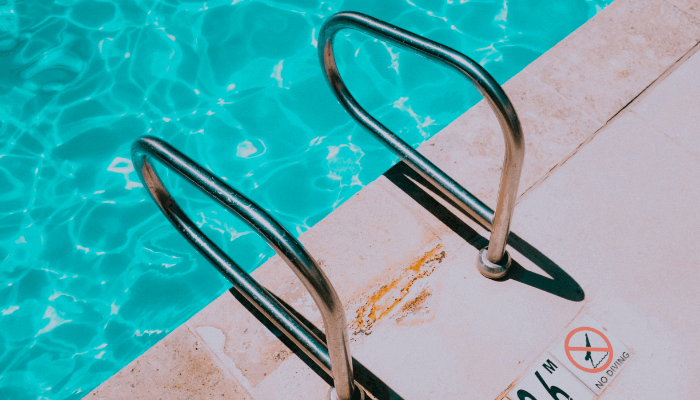
- Stainless steel handrails (pitting corrosion)
- Pool lights and light niches
- Heat exchangers in pool heaters
- Metal pool equipment
Natural stone:
- Soft stones (limestone, travertine) can erode faster
- Unsealed stone coping may deteriorate
Mitigation strategies:
- Install sacrificial zinc anodes (corrode instead of pool components)
- Use salt-resistant materials: 316 marine-grade stainless steel for handrails, plastic/resin fixtures
- Seal natural stone annually
- Rinse metal fixtures with fresh water weekly
Chlorine pools: No corrosion concerns from sanitizer itself (balanced pH prevents corrosion).
Compatibility with Pool Heaters
Saltwater pools: Require titanium or cupro-nickel heat exchangers (salt-resistant). Standard copper heat exchangers corrode rapidly. Salt-compatible heaters cost €150-300 more than standard models.
Chlorine pools: Compatible with all heater types.
Automation and Smart Systems
Both systems integrate well with automation:
Saltwater: Salt generators include digital controls for chlorine output adjustment, self-diagnostic features, and can integrate with pool automation systems.
Chlorine: Automatic chlorine feeders (erosion or injection systems) provide hands-free dosing similar to saltwater automation.
Environmental Considerations
Energy Consumption
Saltwater pools: Salt chlorine generator adds 500-800 watts load running 4-12 hours daily = 60-120 kWh monthly extra electricity consumption.
Chlorine pools: No additional electrical load beyond standard pump and filter.
Portugal electricity costs: At €0.15/kWh average, saltwater generators add €9-18 monthly (€108-216 annually) to electricity bills.
Chemical Production and Waste
Saltwater pools:
- Chlorine produced on-site (no manufacturing, packaging, transportation)
- Salt is natural mineral requiring minimal processing
- Backwash water contains salt (dispose per local regulations)
Chlorine pools:
- Chlorine manufactured industrially (energy-intensive process)
- Plastic packaging waste from chlorine products
- Chemical transportation emissions
Verdict: Saltwater has lower overall environmental impact despite higher electricity use.
Common Problems and Troubleshooting
Saltwater Pool Issues
Green water despite generator running:
- Cause: Salt cell covered in calcium scale (blocks chlorine production)
- Solution: Clean cell with muriatic acid soak
High pH (above 7.8):
- Cause: Electrolysis naturally raises pH
- Solution: Add pH reducer weekly; run generator fewer hours
Low salt warning:
- Cause: Salt lost through backwashing, splash-out
- Solution: Add pool salt to restore 3,000-4,000 ppm
Chlorine Pool Issues
Constant chlorine consumption:
- Cause: Inadequate stabilizer (CYA) allows UV to destroy chlorine rapidly
- Solution: Test and adjust stabilizer to 30-50 ppm
Algae despite adequate chlorine:
- Cause: Combined chlorine (chloramines) instead of free chlorine
- Solution: Shock pool to break chloramines
Strong chlorine smell:
- Cause: Chloramines (not excess chlorine as commonly believed)
- Solution: Shock pool to oxidize organic matter
Portugal-Specific Considerations
Climate Effects
Hot, dry summers (June-September):
High UV exposure and heat increase chlorine consumption. Chlorine pools require 30-50% more chlorine in summer. Saltwater generators run longer hours (10-12 hours daily versus 4-6 hours in cooler months).
Mild winters:
Portugal’s mild winters mean pools remain usable longer (March-November in most regions). Year-round operation favors saltwater for reduced chemical handling.
Hard Water Challenges
Portugal’s water is often hard (high calcium). This accelerates salt cell scaling in saltwater pools. Plan for quarterly cell cleaning rather than annual in hard water areas.
Electricity Costs
Portugal’s electricity prices are moderate compared to Northern Europe. Saltwater generator operating cost (€108-216 annually) is offset by chemical savings (€170-330 annually), making saltwater economically viable.
Which System is Right for You?
Choose Saltwater If
- You prioritize swimmer comfort (soft water, minimal eye/skin irritation)
- You’re willing to invest more initially for lower long-term costs
- You prefer low-maintenance pool care (monthly versus weekly tasks)
- You have €1,500-2,900 available for upfront equipment costs
- Your pool will be used frequently (higher usage justifies investment faster)
Choose Chlorine If
- You have a limited initial budget (avoid €1,500-2,900 generator cost)
- You’re comfortable with weekly pool maintenance routine
- You have extensive metal fixtures that salt might corrode
- You prefer simple, proven technology with widespread service availability
- Your pool will have light use (lower usage extends chemical cost payback period)
The Third Option: Natural Pools
Neither saltwater nor chlorine pools are necessary for clean swimming water. Natural pools (also called swimming ponds or ecological pools) eliminate chemical sanitization entirely through biological filtration.
How Natural Pools Work
Water circulates through planted regeneration zones (wetlands) filled with aquatic plants (reeds, rushes, water lilies) growing in gravel substrate. Beneficial bacteria colonize plant roots and gravel, converting organic waste through natural processes. Plants absorb nutrients, preventing algae growth.
No chemicals: Zero chlorine, salt, or chemical sanitizers.
Maintenance: Seasonal plant trimming, annual organic matter removal from regeneration zone – far less than chemical pool maintenance.
Cost structure: Higher initial construction (30-40% more than conventional pools) but near-zero ongoing chemical/equipment costs.
Swimmer experience: Fresh water feel, no chemical irritation, supports biodiversity (dragonflies, frogs).
Portugal advantage: Mediterranean climate ideal for aquatic plants; year-round biological activity.
If you’re interested in chemical-free swimming, natural pools offer a proven alternative to both saltwater and chlorine systems. Oásis Biosistema designs natural pools optimized for Portugal’s climate with appropriate plant selection and biological filtration sizing.
Conclusion
Saltwater and chlorine pools both sanitize effectively but differ significantly in cost structure and maintenance. Saltwater pools require higher upfront investment (€1,500-2,900) but cost less annually (€110-320 versus €280-650). They provide softer water that’s gentler on skin and eyes, require less hands-on maintenance (monthly versus weekly), but introduce corrosion concerns for metal fixtures and certain stones.
Chlorine pools cost less initially, use proven technology with widespread service availability, and avoid corrosion issues, but demand more frequent maintenance and higher ongoing chemical costs. They provide effective sanitation with the trade-off of stronger chemical exposure and less comfortable swimming experience.
For Portugal’s climate, both systems work well. Hot summers increase chlorine consumption in traditional pools while requiring longer generator runtime in saltwater systems. The decision hinges on budget (initial versus ongoing), maintenance preference (weekly versus monthly), and swimmer comfort priorities (chemical exposure versus soft water).
Natural pools present a third option: higher initial investment, minimal ongoing costs, zero chemicals, and ecological integration. All three systems maintain clean swimming water – your choice depends on which combination of costs, comfort, and maintenance aligns with your priorities.
FAQ
What are the disadvantages of a salt water pool?
Salt water pools have higher upfront costs due to the salt chlorinator system. Salt can corrode metal fixtures, pool liners, and surrounding surfaces over time. They also still produce chlorine, require regular monitoring, and the generator cell needs periodic cleaning and replacement, adding to long-term maintenance costs.
Is a salt water pool healthier than chlorine?
Salt water pools are often considered gentler because they produce lower, more stable chlorine levels, reducing irritation to skin and eyes. However, both saltwater and traditional chlorine pools rely on chlorine for sanitation, so health benefits mainly come down to comfort rather than a major difference in hygiene.
Is it easier to maintain a saltwater pool than a chlorine pool?
Saltwater pools are generally easier to maintain because the system automatically generates chlorine, reducing the need for manual chemical handling. However, you still need to test water balance, clean the cell, and monitor salt levels. Maintenance is simpler overall, but not completely hands-off.
What is the healthiest kind of pool?
The healthiest pool is one that is properly maintained with balanced water chemistry and effective sanitation. Saltwater pools are popular for comfort, while mineral and UV systems can reduce chemical use. Ultimately, cleanliness, filtration, and regular testing matter more than the specific pool type.