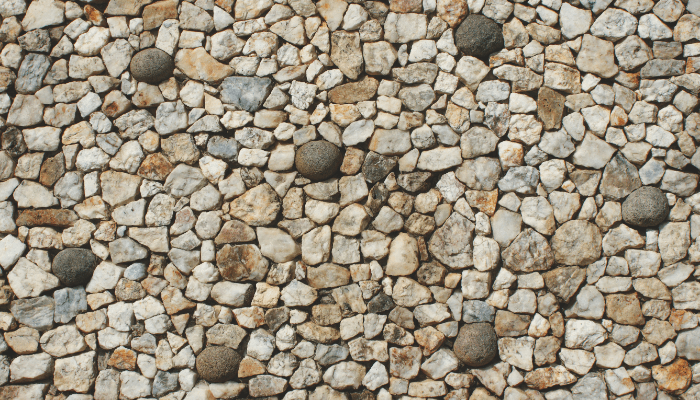
Gravel substrate in natural pool regeneration zones requires a diameter of 10–30 mm (from pea gravel to medium gravel) providing optimal surface area for beneficial bacteria colonisation while maintaining adequate water flow through a 30–40 cm depth layer.
Smaller gravel (< 10 mm, approaching sand) compacts over time restricting oxygen penetration and creating anaerobic conditions, while larger gravel (> 50 mm, coarse stone) provides insufficient bacterial colonisation surface area reducing biological filtration capacity. Washed river rock, crushed granite, or basalt is preferred. Avoid limestone or marble that raise pH above neutral and avoid unwashed gravel that releases sediment clouding the water initially.
This guide covers gravel size specifications for bacterial biofilm formation, substrate depth requirements, layering strategies (single-size layer vs graduated layers), material selection (river rock vs crushed stone, pH-neutral requirements), washing procedures, installation methods, flow distribution design, substrate lifespan, and comparison with sand filters used in conventional pools.
Key Takeaways
- Optimal size: 10–30 mm diameter – from pea gravel (10–15 mm) to medium gravel (20–30 mm)
- Substrate depth: 30–40 cm – provides bacterial colonisation volume and plant root anchorage
- Avoid sand (< 5 mm) – compacts, restricts flow and creates anaerobic dead zones
- Avoid large stone (> 50 mm) – insufficient surface area for bacterial biofilms
- pH-neutral materials only – granite, basalt, river stone (not limestone, marble, or shells)
- Must be washed – removes sediment, dust, and fine particles that cloud water
- Surface area critical – bacteria colonise gravel surfaces performing nitrification
- Flow maintenance – open gravel structure allows water circulation through entire layer
Good Design Starts at the Bottom
Why Gravel Size Matters
Bacterial Surface Area
Biofilm colonisation: Beneficial bacteria (Nitrosomonas, Nitrobacter) colonise gravel surfaces forming biofilms (slime layers) where nitrification occurs converting toxic ammonia from swimmer pollutants → nitrite → nitrate.
Surface-to-volume ratio: Smaller gravel provides more surface area per cubic metre of substrate than larger gravel. Example: 10 mm gravel offers approximately 300 m² of surface area per m³, while 50 mm stone offers only 60 m² per m³. It’s an 80% reduction in bacterial colonisation potential.
Optimal balance: 10–30 mm diameter maximises surface area while maintaining an open structure for water flow and oxygen penetration.
Water Flow Through Substrate
Open structure essential: Water must flow freely through the gravel layer contacting bacterial biofilms and plant roots. Restricted flow creates bypass channels where water flows through limited paths leaving most of the substrate unused.
Compaction risk: Fine materials (sand, small gravel < 5 mm) compact under the weight of the substrate and overlying plants. Compacted substrate restricts flow and creates anaerobic zones that produce toxic hydrogen sulphide (rotten egg smell).
Flow velocity: 10–30 mm gravel maintains a uniform flow velocity through the entire layer. It’s slow enough for adequate bacterial contact time and fast enough to prevent settling and clogging.
Oxygen Penetration
Aerobic bacteria requirement: Nitrifying bacteria require oxygen for ammonia conversion. Adequate oxygen penetration throughout the substrate depth is essential for biological function.
Gravel size impact: The open structure of 10–30 mm gravel allows oxygen to diffuse from the surface water down through the 30–40 cm substrate depth. Sand or fine gravel blocks oxygen penetration beyond the first 5–10 cm creating anaerobic conditions below.
Root oxygen transport: Plant roots transport oxygen from leaves through stems to the root zone creating aerobic microenvironments in the substrate. The open gravel structure allows this oxygen to diffuse supporting broader bacterial populations.
Recommended Gravel Sizes
Pea Gravel (10–15 mm)
Description: Small rounded stones approximately pea-sized. Smooth edges from river tumbling or mechanical rounding.
Surface area: High, approximately 250–300 m² per m³ of substrate, providing maximum bacterial colonisation potential.
Flow characteristics: Good flow. Minimal compaction risk when washed and free of fines (dust, sediment).
Plant compatibility: Excellent for fine-rooted aquatic plants (Juncus, Iris, submerged species). Roots easily penetrate between the small stones.
Applications: Preferred for regeneration zones under 50 m², pools with high bather load requiring maximum bacterial capacity, and systems without supplemental mechanical filtration.
Small-Medium Gravel (15–25 mm)
Description: Rounded or angular stones 15–25 mm diameter. Standard “aquarium gravel” size range.
Surface area: Very good. Approximately 150–200 m² per m³ of substrate. Slightly reduced from pea gravel but still excellent bacterial support.
Flow characteristics: Excellent flow. Open structure prevents compaction even in deep layers (40+ cm). Minimal maintenance.
Plant compatibility: Suitable for all aquatic plant species. Large enough to anchor aggressive spreaders (Typha, Phragmites) while accommodating fine-rooted species.
Applications: Most versatile size. Suitable for all regeneration zone designs 30–100+ m². Balance of surface area, flow, and ease of handling during installation.
Medium Gravel (25–35 mm)
Description: Larger rounded or crushed stones. Upper range for regeneration zone substrate.
Surface area: Adequate with approximately 100–120 m² per m³. Reduced colonisation potential compared to smaller sizes but sufficient for most applications.
Flow characteristics: Superior flow. Zero compaction risk and maximum water circulation velocity.
Plant compatibility: Best for large aggressive species (Phragmites, Typha, Schoenoplectus) requiring substantial root anchorage. May shift under fine-rooted plants.
Applications: Large regeneration zones (100+ m²), systems with mechanical pre-filtration reducing bacterial load, and pools with low bather use requiring less biological capacity.
Materials to Avoid
Sand and Fine Gravel (< 10 mm)
Compaction: Sand and fine gravel compact under the weight of the substrate creating a dense layer that restricts water flow and oxygen penetration.
Anaerobic conditions: Compacted substrate becomes oxygen-depleted. Anaerobic bacteria produce hydrogen sulphide (toxic to plants and smells like rotten eggs) instead of beneficial nitrification.
Maintenance problems: Compacted substrate requires periodic excavation and replacement (labour-intensive and expensive) or mechanical aeration (pumping air through the substrate, which is complex and energy-consuming).
Limited application: Sand is used only as a thin top layer (2–5 cm) over gravel in some designs for enhanced particle filtration, not as primary substrate.
Large Stone (> 50 mm)
Insufficient surface area: Large stones provide minimal bacterial colonisation surface relative to volume. Example: 100 mm diameter stone offers only 30 m² of surface per m³ – a 90% reduction compared to 10 mm gravel.
Inadequate filtration: Reduced bacterial capacity cannot process swimmer pollutants adequately. Results in elevated ammonia and nitrite and poor water quality.
Plant instability: Large gaps between stones allow fine-rooted plants to shift and fall over. Requires individual plant containment (pots, fabric bags) complicating installation and aesthetics.
Application: Large stone (50–100+ mm) is used only as a decorative surface layer over the functional gravel substrate or as edge stabilisation, not as primary filtration media.
Limestone and Marble
pH elevation: Limestone (calcium carbonate) and marble dissolve slowly in water releasing carbonate ions raising pH to 8.0–8.5+. Elevated pH stresses aquatic plants that prefer neutral conditions and reduces bacterial nitrification efficiency.
Algae promotion: High pH combined with carbonate availability can promote certain algae species growth.
Alternative: Use pH-neutral materials like granite, basalt, quartzite, or river stone. Test a small sample in water for 48 hours. pH should remain stable between 7.0 and 7.5.
Substrate Depth Requirements
Standard Depth of 30–40 cm
Bacterial volume: 30–40 cm depth provides adequate gravel volume for bacterial colonisation processing typical residential pool bather loads. Example: 50 m² regeneration zone × 0.35 m depth = 17.5 m³ gravel supporting bacterial populations handling 6–8 daily swimmers.
Root penetration: Aquatic plants root to 20–30 cm depth typically. 30–40 cm substrate accommodates full root development.
Particle storage: The gravel layer traps fine particles (silt, organic debris) settling from water flowing through the regeneration zone. Adequate depth prevents rapid clogging requiring frequent maintenance.
Deeper Substrates (40–60 cm)
Enhanced capacity: Deeper substrates increase bacterial volume handling higher bather loads or compensating for undersized regeneration zone surface area (when space is limited).
Layering opportunity: Depth allows graduated gravel layers to coarse the bottom (25–35 mm) for flow distribution, medium middle (15–25 mm) for primary biological activity, and fine top (10–15 mm) for particle filtration.
Cost consideration: Additional depth increases gravel volume (material cost, transport cost, installation labour). Example: 50 m² zone at 30 cm depth requires 15 m³ gravel; the same zone at 50 cm requires 25 m³ (+67% volume, +€500–1,000 typical material cost).
Shallow Substrates (< 30 cm)
Insufficient volume: Less than 30 cm depth provides inadequate bacterial colonisation volume, limited particle storage, and restricted root development.
Rapid clogging: Thin substrate layers clog quickly with trapped particles requiring frequent excavation, cleaning, and replacement.
Not recommended: Minimum 30 cm depth for functional biological filtration. Exceptions: supplemental mechanical filtration (sand filter, skimmer) reducing reliance on the gravel layer.
Single-Size Layer vs Graduated Layers
Single-Size Substrate (Uniform 10–30 mm)
Simplicity: A single gravel size throughout the depth simplifies installation: dump, spread, and level. No layering complexity.
Cost-effective: Purchase a single size in bulk quantities (lower price per tonne than mixed sizes).
Function: Provides adequate bacterial surface area, flow, and particle filtration for most applications.
Recommendation: Suitable for regeneration zones 30–80 m², moderate bather loads, and straightforward designs.
Graduated Layers (Coarse to Fine)
Bottom layer (coarse, 25–35 mm): 10–15 cm depth. Creates an open flow distribution layer ensuring water spreads evenly across the full width of the regeneration zone preventing bypass channels.
Middle layer (medium, 15–25 mm): 15–20 cm depth. Primary biological activity zone. Optimal surface area for bacterial biofilms and adequate flow maintenance.
Top layer (fine, 10–15 mm): 5–10 cm depth. Enhanced particle filtration trapping fine sediment before it enters the middle layer. Provides a smooth surface for plant installation.
Advantages: Superior flow distribution, reduced clogging, and extended maintenance intervals.
Complexity: Requires careful installation preventing layer mixing. Costs €200–500 additional labour for a 50 m² zone compared to single-size substrate.
Application: Large regeneration zones (80+ m²), high bather loads, and pools without supplemental mechanical filtration.
Material Selection and Preparation
Rounded vs Angular Gravel
River rock (rounded): Smooth edges from natural water tumbling. Preferred for regeneration zones as the rounded shape prevents compaction better than angular. It is also gentler on the pool liner during installation.
Crushed stone (angular): Sharp edges from mechanical crushing. Acceptable but may compact slightly more than rounded over time. Risk of liner puncture during installation if edges are very sharp.
Recommendation: Rounded river rock preferred. If crushed stone is used, verify edges are not excessively sharp (no knife-like points that could puncture the liner).
Washing Requirements
Unwashed gravel: Contains fine sediment, dust, and clay particles adhering to stone surfaces. When placed in the pool, the fines wash off clouding water for days to weeks.
Washed gravel: Pre-cleaned removing fines. Water remains clear immediately after installation.
DIY washing: Place gravel in a large container (drum, wheelbarrow), spray with hose while stirring until runoff clears. Labour-intensive for large volumes (10+ m³).
Commercially washed gravel: Pre-washed at quarry, bagged or bulk. Costs €10–30 per tonne more than unwashed but eliminates labour and water clarity problems.
Recommendation: Always use washed gravel for regeneration zones. Initial clarity is worth the premium cost.
pH Testing
Procedure: Place a small gravel sample (500 grams) in a bucket with 5 litres of water. Wait 48 hours. Test pH with meters or strips.
Acceptable result: pH 7.0–7.5 (neutral). No significant change from starting water pH.
Unacceptable result: pH > 7.8 indicates carbonate-releasing material (limestone, marble, shells).
Frequency: Test each new gravel source before purchasing bulk quantities. Different quarries and regions have different mineral compositions.
Installation and Flow Distribution
Even Distribution Critical
Goal: Water entering the regeneration zone must spread uniformly across the entire width, flow through the full substrate depth, and exit via the collection system. No bypass channels, no dead zones.
Perforated distribution pipe: Buried in the bottom gravel layer (coarse 25–35 mm in a layered system, or the bottom 10 cm if single-size). The pipe has holes drilled every 15–30 cm along its length allowing water to discharge evenly.
Multiple inlet points: Large regeneration zones (> 80 m²) benefit from multiple distribution pipes spaced across the width ensuring uniform flow even in the far corners.
Slope and Drainage
Slight slope (1–2%): Regeneration zone bottom sloped gently toward the collection point aids drainage for maintenance and prevents stagnant pockets.
Collection system: On the opposite end from the distribution pipe, a slotted pipe or gravel-free trench collects filtered water for return to the swimming zone.
Overflow management: The top edge of the gravel layer should sit 5–10 cm below the final water surface allowing water to flow over the entire substrate before exiting via the collection system.
Maintenance and Lifespan
Gravel Longevity
Indefinite physical lifespan: Gravel itself does not degrade, decompose, or wear out under normal conditions.
Bacterial renewal: Biofilms continuously regenerate. Old bacterial layers slough off and new layers form. The system renews itself without gravel replacement.
Particle accumulation: Over years (5–10+), trapped fine particles accumulate in the gravel interstices gradually reducing flow and colonisation surface. Eventual cleaning may be required.
Cleaning Procedures
Vacuuming: Use a pond vacuum or pool vacuum adapted for gravel cleaning. Suction removes surface debris and organic matter without disturbing the substrates. Frequency: annual or as needed if visible sediment accumulation.
Backwashing (rare): Reverse water flow through the gravel layer dislodges trapped particles flushed to waste. Requires plumbing designed for backwash capability. Most natural pools do not include this feature and vacuuming is sufficient.
Excavation and replacement (rare): If severe clogging occurs (poor initial design, inadequate maintenance, or system overload), excavate the gravel, clean or replace it, and reinstall. Labour-intensive and expensive. Should not be necessary with proper sizing, flow design, and routine vacuuming.
Natural Pool vs Conventional Pool Filter Media
Conventional Sand Filters
Sand size: 0.45–0.55 mm (extremely fine) compared to regeneration zone gravel of 10–30 mm.
Function: Mechanical filtration only. Sand traps particles as water flows through tightly packed layers. No biological activity. Sand is too fine and too compact for bacterial colonisation.
Maintenance: Frequent backwashing (weekly to monthly) flushing trapped particles to waste. Sand replacement every 5–7 years as grains round and filtration efficiency decreases.
Depth: 1.0–1.2 metre sand layer depth in commercial filter tanks.
Regeneration Zone Gravel
Gravel size: 10–30 mm (20–60× larger than sand filter media).
Function: Biological filtration primary. Bacteria on gravel surfaces perform water purification. Mechanical particle trapping is a secondary benefit.
Maintenance: Minimal. Annual vacuuming removes surface debris. No backwashing, no filter media replacement.
Depth: 30–40 cm gravel layer (shallower than sand filters due to biological vs mechanical function).
Natural Pools of Oásis Biosistema
Oásis Biosistema designs natural swimming ponds specifying appropriate substrate materials for Portuguese climate and water conditions. The base uses special-grade white quartz sand that is dense, practically sterile, and selected specifically because it does not alter pH or water parameters.
Its weight means it settles quickly without clouding the water, debris remains on the surface rather than mixing in, and the bottom stays permanently visible at all times.
This is integrated with a custom biological filtration system, UV sterilisation and ozone technology, ensuring crystal-clear water through active support rather than relying on substrate biology alone.
Conclusion
Gravel substrate in natural pool regeneration zones requires a diameter of 10–30 mm (from pea to medium gravel) providing optimal bacterial surface area for biofilm colonisation performing nitrification while maintaining an open structure for water flow and oxygen penetration through a 30–40 cm depth layer.
Smaller materials under 10 mm compact, restricting flow and creating anaerobic conditions, while stone above 50 mm provides insufficient bacterial colonisation surface area reducing biological capacity. pH-neutral washed materials (river rock, granite, basalt) are preferred avoiding limestone or marble that raise pH above 7.5, with installation requiring even flow distribution via perforated pipes preventing bypass channels and ensuring uniform biological contact.
Oásis Biosistema designs natural swimming pools specifying appropriate gravel substrates for Portuguese climate and water conditions, integrating planted regeneration zones with correct substrate sizing into landscape aesthetics providing chemical-free biological filtration through properly sized gravel layer bacterial colonisation.
FAQ
What are the different sizes of limestone gravel?
Limestone gravel is typically available in sizes such as fine dust (0–5 mm), pea gravel (5–10 mm), 10–20 mm, 20–40 mm, and larger road base crushed stone (40 mm+). Smaller sizes are used for paths, while larger grades are used for driveways and drainage.
What sizes does limestone come in?
Limestone is sold in a wide range of sizes from powder (dust/fines) up to large crushed stone above 50 mm. It can be processed into uniform aggregates depending on its use in construction, landscaping, or drainage.
What are standard gravel sizes?
Standard gravel sizes usually include:
- Fine (0–5 mm) – compacting surfaces
- Pea gravel (5–10 mm) – decorative paths
- Medium (10–20 mm) – driveways and drainage
- Large (20–40+ mm) – heavy-duty base layers
These ranges may vary slightly by country or supplier.
What's cheaper, limestone or gravel?
Generally, limestone is cheaper than decorative gravel because it is widely available and easy to crush. However, the final cost depends on transport, grading, and local supply. Crushed gravel blends can sometimes cost more if they are washed or specially processed.