Hydrophytes are plants that have adapted to live in water or waterlogged environments. The term comes from ancient Greek: hydro (water) + phyte (plant). Unlike terrestrial plants that require well-drained soil, hydrophytes possess specialized morphological and physiological adaptations allowing them to thrive in oxygen-deficient aquatic conditions where most plants cannot survive.
These aquatic plants play critical ecological roles in wetlands, ponds, lakes, rivers, and constructed water features. They stabilize sediments, purify water through nutrient absorption, provide habitat for aquatic wildlife, and serve as primary producers in aquatic food chains. Understanding hydrophytes is essential for wetland conservation, water quality management, and designing natural swimming pools.
Key Takeaways
- Hydrophytes are aquatic plants adapted to grow in water or waterlogged soil with oxygen-deficient conditions
- Three main types: Emergent (rooted, partially above water), submerged (entirely underwater), and floating (on water surface)
- Key adaptations: Aerenchyma tissue (air spaces for oxygen transport), reduced root systems, specialized leaves, flexible stems
- Ecological functions: Water purification, sediment stabilization, wildlife habitat, oxygen production, nutrient cycling
- Examples: Typha (cattail), Phragmites (common reed), Nymphaea (water lily), Lemna (duckweed), Ceratophyllum (hornwort)
- Natural pool application: Hydrophytes provide biological filtration in regeneration zones, eliminating need for chemical treatment
Let Nature Filter Your Pool For You
Definition and Etymology
Scientific Definition
Hydrophyte: A vascular plant morphologically and physiologically adapted to grow in aquatic environments or saturated substrates where oxygen availability is limited compared to terrestrial conditions.
Hydrophytes include plants that:
- Grow fully submerged underwater
- Float on water surfaces
- Root in waterlogged soil with aerial parts above water
- Live in freshwater or marine environments
Etymology
Greek origin: Hudro- (ὑδρο-) meaning water + Phyton (φυτόν) meaning plant
The term was first used in 1822 to describe plants growing in water. Over time, the definition expanded to include plants growing in saturated or waterlogged soils, particularly those in wetland environments.
Related Terms
Aquatic plants: Broader term encompassing all plants living in water, including hydrophytes (macrophytes visible to the naked eye) and aquatic microphytes (microscopic aquatic plants).
Macrophytes: Aquatic plants large enough to see without magnification (the focus of this guide).
Helophytes: Subset of emergent hydrophytes that grow in marshes, with roots in waterlogged soil and stems/leaves above water (formerly considered separate from hydrophytes).
Types of Hydrophytes
Hydrophytes are classified by their growth form and relationship to the water surface.
1. Emergent Hydrophytes (Amphibious Plants)
Characteristics: Rooted in waterlogged soil or shallow water bottoms with stems and leaves extending above the water surface.
Adaptations: Roots and submerged stems display hydrophytic features (aerenchyma, reduced cuticle), while aerial parts show characteristics of terrestrial plants (stomata, photosynthetic tissue, protective cuticle).
Ecological role: Stabilize shorelines, provide vertical habitat structure, transition zone between aquatic and terrestrial ecosystems.
Common examples:
Typha latifolia and Typha angustifolia (Cattails):
Height 1.5-3 meters, cylindrical brown seed heads, rhizomatous spreading. Dominant in marshes, pond edges, slow-moving streams. Excellent nutrient absorbers (especially phosphorus and nitrogen).
Phragmites australis (Common Reed):
Height 2-4 meters, feathery purple-brown flower plumes, aggressive spreader. Most widespread wetland plant globally. Superior oxygen transport capacity supports extensive bacterial colonization on roots.
Iris pseudacorus (Yellow Flag Iris):
Height 0.8-1.5 meters, bright yellow flowers May-June, sword-shaped leaves. Ornamental value makes it popular in constructed wetlands and natural pools.
Juncus effusus (Soft Rush):
Height 0.5-1.5 meters, cylindrical green stems, small brown flowers. Tolerates fluctuating water levels, useful in intermittent wetlands.
Sagittaria species (Arrowhead):
Height 0.3-1 meter, distinctive arrow-shaped leaves above water, white flowers, edible tubers. Provides food for waterfowl.
2. Submerged Hydrophytes (Underwater Plants)
Characteristics: Entire plant lives underwater except flowering structures, which may emerge briefly for pollination.
Adaptations: No cuticle (unnecessary for water retention), thin leaf epidermis for gas exchange directly with water, extensive aerenchyma for buoyancy and oxygen storage, reduced or absent stomata, finely divided leaves (increase surface area for nutrient/gas absorption).
Ecological role: Oxygenate water through photosynthesis, provide underwater habitat and food for fish and invertebrates, compete with algae for nutrients (help maintain water clarity).
Common examples:
Ceratophyllum demersum (Hornwort):
Rootless, free-floating underwater, finely divided whorled leaves, dark green. Rapid growth consumes excess nutrients, preventing algae blooms. Popular in aquariums and natural pools.
Myriophyllum spicatum (Eurasian Water Milfoil):
Feather-like leaves arranged in whorls, reddish stems, rooted in substrate. Forms dense underwater meadows. Can become invasive in non-native regions.
Elodea canadensis (Canadian Waterweed):
Small oval leaves in whorls of three, bright green, rooted or free-floating fragments. Produces oxygen prolifically and is used in biology education to demonstrate photosynthesis.
Hydrilla verticillata (Hydrilla):
Small serrated leaves in whorls, aggressive growth. Highly invasive in many regions but effective at nutrient removal when managed properly.
Vallisneria species (Eelgrass):
Long ribbon-like leaves, rooted in substrate. Important food source for waterfowl. Marine species critical for coastal ecosystems.
3. Floating Hydrophytes
Free-floating plants: Not rooted; entire plant drifts on water surface.
Characteristics: Leaves with waxy upper surface (prevents waterlogging), spongy tissue for buoyancy, roots hang in water for nutrient absorption, rapid reproduction.
Common examples:
Lemna species (Duckweed):
Tiny (2-5mm), single root, bright green. The fastest-growing flowering plant can double biomass in 48 hours. Excellent nutrient absorber but can cover entire surfaces if unchecked.
Eichhornia crassipes (Water Hyacinth):
Large leaves with inflated petioles providing buoyancy, lavender flowers, and thick root mass. Beautiful but highly invasive—blocks waterways and depletes oxygen. Prohibited in many countries.
Pistia stratiotes (Water Lettuce):
Rosette of velvety leaves resembling lettuce, feathery roots. Rapid reproduction. Effective nutrient removal but requires management.
Azolla species (Water Fern):
Tiny (1-2.5cm), forms dense red-green mats, fixes atmospheric nitrogen via symbiotic cyanobacteria. Used traditionally as rice paddy fertilizer.
Rooted floating-leaf plants: Anchored in substrate with leaves floating on surface.
Characteristics: Long hollow stems connect underwater roots to floating leaves, large leaves with waxy coating, flowers above water.
Common examples:
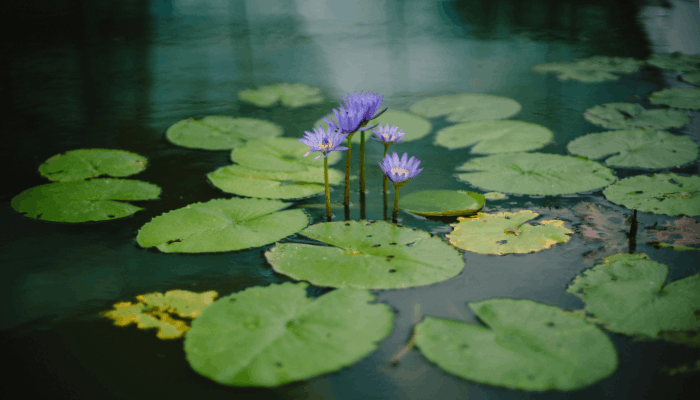
Nymphaea species (Water Lily):
Round floating leaves (10-30cm diameter), showy flowers (white, pink, yellow, blue), rhizomatous roots in substrate. Iconic ornamental and ecologically important—provide shade reducing algae growth, shelter for fish.
Nuphar lutea (Yellow Water Lily):
Similar to Nymphaea but yellow flowers, tolerates cooler temperatures and lower light. Native to Europe.
Nelumbo nucifera (Lotus):
Massive leaves (30-80cm) held above water on tall stems, spectacular pink/white flowers. Sacred in many Asian cultures. Excellent water purification capacity.
Physiological and Morphological Adaptations
Hydrophytes have evolved specialized features to survive in oxygen-deficient aquatic environments.
Aerenchyma Tissue
Structure: Extensive air spaces (gas-filled cavities) within stems, roots, and leaves, created by programmed cell death or cell separation during development.
Function:
- Transports oxygen from leaves (where photosynthesis produces oxygen) to submerged roots in anaerobic sediment
- Provides buoyancy, helping stems remain upright and leaves reach surface for light
- Stores gases for periods of submersion
Prevalence: Found in >90% of emergent and floating hydrophytes; less common in submerged species that absorb dissolved oxygen directly from water.
Reduced Root Systems
Adaptation: Roots often smaller, less branched, and shallower than terrestrial plants.
Reasons:
- Water absorption occurs across entire submerged surface (leaves, stems), not just roots
- Nutrients absorbed directly from water column, reducing need for extensive soil exploration
- Roots primarily anchor plant rather than absorb resources
- Some species (hornwort, duckweed) lack roots entirely
Specialized Leaf Structures
Submerged leaves: Thin, finely divided (increase surface area), no or reduced cuticle (prevents gas exchange), flexible (move with water currents without breaking).
Floating leaves: Large and flat (maximize photosynthesis), waxy upper surface (repels water), stomata only on upper surface (gas exchange with atmosphere).
Emergent leaves: Thicker, more rigid, stomata on both surfaces, protective cuticle similar to terrestrial plants.
Heterophylly: Some species produce different leaf forms depending on whether leaves are submerged or aerial (Ranunculus aquatilis has finely divided underwater leaves and lobed floating leaves).
Flexible Stems
Adaptation: Stems contain a high proportion of parenchyma tissue (soft, pliable cells) and reduced strengthening tissue (lignin, sclerenchyma).
Function: Flexibility allows stems to bend with water currents and wave action without breaking. Rigid stems would snap under constant motion.
Modified Stomata
Location:
- Submerged plants: Absent or greatly reduced (no gas exchange with atmosphere needed)
- Floating leaves: Only on upper surface facing air
- Emergent plants: On aerial portions similar to terrestrial plants
Ecological Functions of Hydrophytes
Water Purification
Nutrient absorption: Roots and leaves absorb dissolved nitrogen (ammonia, nitrate) and phosphorus (phosphate) from water, incorporating them into plant biomass. When plants are harvested, nutrients are physically removed from the ecosystem.
Heavy metal uptake: Some hydrophytes (phytoremediation species) accumulate heavy metals (cadmium, lead, mercury, arsenic) from contaminated water, extracting pollutants.
Pathogen reduction: Dense plant growth and associated bacterial biofilms reduce pathogen populations through competition, predation by protozoa, and filtration.
Sediment Stabilization
Root binding: Emergent hydrophyte roots bind sediment particles, preventing erosion on shorelines and stream banks.
Current reduction: Dense stands of stems and leaves slow water velocity, causing suspended sediments to settle rather than remain in the water column. Reduces turbidity.
Oxygen Production
Photosynthesis: Submerged hydrophytes produce oxygen during daylight, enriching dissolved oxygen levels in water. Essential for aerobic aquatic organisms (fish, invertebrates, beneficial bacteria).
Note: Respiration consumes oxygen at night. Dense plant growth can cause oxygen depletion overnight in stagnant water.
Wildlife Habitat
Food source: Leaves, stems, seeds, and roots consumed by waterfowl, fish, turtles, invertebrates, mammals (muskrats, beavers).
Shelter: Dense vegetation provides cover for fish fry, amphibian larvae, nesting birds, and invertebrates from predators.
Breeding sites: Many amphibians lay eggs on submerged leaves; birds nest in emergent vegetation.
Carbon Sequestration
Biomass accumulation: Hydrophytes capture atmospheric CO₂ via photosynthesis, storing carbon in plant tissue and sediment as organic matter accumulates.
Hydrophytes in Natural Swimming Pools
Natural pools use hydrophytes as living biological filters in regeneration zones, eliminating need for chemical sanitizers.
Regeneration Zone Design
Structure: Shallow (0.3-0.8m depth) planted area separate from swimming zone but connected via continuous water circulation.
Plant selection: Emergent species dominate (Phragmites, Typha, Juncus, Iris) with submerged oxygenators (Ceratophyllum, Myriophyllum) and floating species for additional nutrient uptake.
Function: Water flows through gravel substrate and plant roots where beneficial bacteria colonize, creating massive biological filtration surface area. Bacteria decompose organic matter; nitrifying bacteria convert ammonia to nitrate; plants absorb nitrate.
Water Quality Maintenance
Pollutant removal:
- Organic matter: Bacteria decompose swimmer-introduced organics (skin cells, sweat, oils, sunscreen)
- Nitrogen: Bacterial nitrification + plant absorption removes 85-90%
- Phosphorus: Plant uptake + substrate adsorption removes 70-90%
- Pathogens: Long retention time + bacterial competition + plant-root exudates reduce bacteria
Clarity: Biological filtration maintains 1-3 meter visibility in swimming zones without chlorine.
Portugal Climate Advantages
Year-round activity: Mediterranean climate allows continuous plant growth and biological filtration even in winter (reduced but not dormant).
Native species available: Typha latifolia, Phragmites australis, Juncus species, Iris pseudacorus all native or naturalized in Portugal wetlands.
Warm summers: Peak plant growth and bacterial activity coincide with peak swimming season (June-September).
For those interested in natural swimming pools using hydrophytes for chemical-free water purification, Oásis Biosistema designs systems optimized for Portugal’s climate with appropriate species selection.
Hydrophytes vs Other Plant Categories
Plants are classified by water requirements:
Hydrophytes: Require permanent or prolonged saturation; adapted for oxygen-deficient conditions.
Mesophytes: Grow in moderate moisture conditions (most agricultural crops, garden plants, temperate forest species). Cannot tolerate waterlogged soil or submersion.
Xerophytes: Adapted to dry conditions with minimal water availability (cacti, succulents, desert shrubs). Opposite adaptations to hydrophytes – thick cuticles, reduced leaves, deep roots.
Challenges and Management
Invasive Species
Many hydrophytes become invasive when introduced to non-native regions: water hyacinth, hydrilla, Eurasian water milfoil. Rapid reproduction, lack of natural predators, and ability to fragment and regrow from small pieces allow them to dominate waterways, block navigation, and outcompete native species.
Management: Mechanical removal, biological control (introducing native herbivores), targeted herbicides in severe cases.
Eutrophication
Excess nutrients (nitrogen, phosphorus) from agricultural runoff or sewage cause explosive hydrophyte growth. Dense vegetation covers entire water surfaces, blocking light to submerged plants. When plants die and decompose, oxygen depletion kills fish.
Prevention: Reduce nutrient inputs upstream; maintain diverse plant communities; harvest excess biomass seasonally.
Seasonal Die-Back
In temperate climates, many hydrophytes die back in winter. Decomposing plant material consumes oxygen and releases nutrients back into water, potentially triggering algae blooms in spring.
Management: Harvest dead biomass in autumn before decomposition accelerates; maintain oxygenators during winter.
Conclusion
Hydrophytes are plants morphologically and physiologically adapted to aquatic environments through specialized features including aerenchyma tissue for oxygen transport, reduced root systems, flexible stems, and modified leaves. The three main types, including emergent (rooted with aerial parts), submerged (entirely underwater), and floating (on surface), each possess distinct adaptations for their specific niches.
These aquatic plants provide essential ecological services: water purification through nutrient absorption, sediment stabilization, oxygen production, wildlife habitat, and carbon sequestration. Common species include Typha (cattails), Phragmites (common reed), Nymphaea (water lilies), Ceratophyllum (hornwort), and Lemna (duckweed).
In natural swimming pools, hydrophytes serve as living biological filters in regeneration zones, maintaining water quality without chemical sanitizers. Portugal’s Mediterranean climate provides ideal conditions for year-round hydrophyte growth, making natural pools particularly effective in this region.
Understanding hydrophytes is fundamental to wetland conservation, water quality management, ecological restoration, and designing sustainable aquatic systems that harness nature’s purification capacity rather than relying on chemical treatment.
FAQ
What is the definition of a hydrophyte?
A hydrophyte is a plant adapted to grow in water or very wet environments. These plants have special features like thin cuticles, air-filled tissues, and flexible stems that help them survive in aquatic conditions.
What are 5 examples of hydrophytes?
Common hydrophytes include water lily, lotus, duckweed, hydrilla, and water hyacinth.
How do humans use hydrophytes?
Humans use hydrophytes for food (like lotus), water purification, decoration in ponds, and habitat creation for wildlife. Some are also used in traditional medicine and wastewater treatment systems.
What are the 4 types of hydrophytes?
The four main types of hydrophyte are:
- Floating plants (e.g., duckweed)
- Submerged plants (e.g., hydrilla)
- Emergent plants (roots in water, stems above)
- Free-floating plants (not rooted, drift on water surface)