Spiders trigger strong reactions. And garden spiders? With their thick legs and big webs that seem to appear overnight like cursed art installations? Yeah, they don’t exactly inspire calm. But here’s the thing: the vast majority of garden spiders aren’t poisonous to humans. Not even close.
And the word “poisonous” is where most of the confusion starts. People use it interchangeably with “venomous,” but biologically, they’re not the same. Garden spiders are venomous to their prey. That’s how they catch and eat bugs. But are they medically dangerous to you or your dog? Probably not.
Still, that doesn’t mean you should ignore every spider situation. There are exceptions. Allergic reactions. Misidentifications. Legitimate pest-control concerns. So in this guide, we’re cutting through the panic and internet myths. No fear-mongering. No hand-waving. Just real answers.
You’ll walk away knowing exactly which spiders to leave alone, which ones to relocate, and when to call someone who won’t scream mid-sentence.
Design a Garden That Works With Nature
Key Takeaways
- Garden spiders are not poisonous to humans; their venom is only harmful to insects.
- Bites are rare and typically result in mild, short-lived symptoms.
- Most garden spiders, like orb-weavers, are beneficial and non-aggressive.
- They play a vital role in your garden by controlling pests like mosquitoes and flies.
- If you spot one in your garden, relocation is better than removal.
- Serious bites or allergic reactions are extremely rare but should be monitored.
- Proper identification helps avoid confusing harmless spiders with dangerous ones.
- Garden spiders are a sign of a healthy outdoor ecosystem, not a threat.
Garden Spiders 101: Who They Are & What They Do
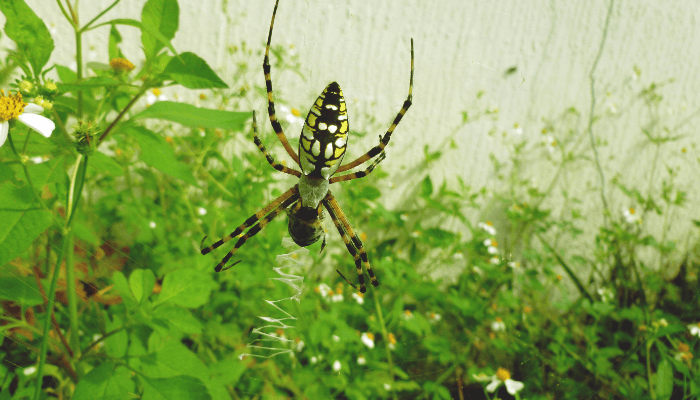
Let’s start with the basics. When people say “garden spider,” they’re usually talking about orb-weavers. These are the ones that build those big, round webs that look like something out of a Halloween movie.
They’re common across Europe and North America and come in various patterns, from yellow and black to brown and striped. But they’re some of the best pest control you didn’t ask for but absolutely need.
They eat mosquitoes, flies, moths, beetles or anything unlucky enough to hit their web. Garden spiders don’t chase. They sit and wait. They’re the quiet introverts of the spider world, and they’re doing your garden a huge favor.
Are Garden Spiders Poisonous or Dangerous to Humans?
Let’s clear up the vocabulary first. Poisonous means harmful when ingested or touched. Venomous means it injects venom, usually through a bite or sting.
Garden spiders? They’re venomous to bugs, not to you. Their venom breaks down the insides of their prey. Delicious, if you’re a spider. To humans, it’s about as threatening as a bee sting. That’s confirmed by multiple sources including WebMD.
Bites are rare. Garden spiders are shy. If you grab one by accident (not advised), you might get a tiny red bump, some itching, maybe mild swelling. If you have an allergy or a compromised immune system, sure, call your doctor. But most people won’t even notice.
So are garden spiders poisonous? No. Are they dangerous? Only to insects and your sense of personal space.
How to Identify Common Garden Spiders
Start with the web. Garden spiders build large, symmetrical webs, often anchored between plants, fences, or even outdoor furniture. If you see a web that looks like it belongs in a textbook, you’re probably looking at an orb-weaver.
Now the spider itself:
- Orb-weavers have bulbous abdomens and long, slightly fuzzy legs.
- Many sport yellow and black stripes (like the iconic black and yellow garden spider) or brown-and-white cross patterns (hello, European garden spider).
If it’s skittering across your patio at night or hiding in the corners of your living room? Probably not a garden spider. They stick to their webs.
And for the record: they don’t want to come inside. If they do, it’s accidental. Not an invasion.
What to Do If You Find One in Your Garden or Home
First option: leave it alone. Seriously. It’s not interested in you.
Second option: gently relocate it. Use the classic cup-and-paper method. Slide it under, carry it out, wish it well. Don’t squish it unless you absolutely have to. You’re killing free pest control.
If you’re seeing dozens inside your home, that’s a different story. It’s likely a different species, and that’s when you call a pro. But one or two harmless spiders in the corner? Let them work.
Benefits of Letting Garden Spiders Stay
This part’s simple. They eat bugs. Not just a few but thousands per season. Mosquitoes, gnats, wasps, flies. If it’s small and buzzing, garden spiders are on it.
Plus, they don’t multiply like house spiders. Females lay eggs in the fall, wrap them in a silk sac, and then vanish. The babies hatch in spring and float away like weird little balloons. You’re not going to wake up to 300 of them under your sink.
They’re also a great sign of a healthy outdoor ecosystem. If you’ve got spiders, it usually means you’ve got plants, pollinators, and balance.
When a Spider Bite Is a Concern
Let’s keep it real: most garden spider bites don’t require treatment. But here’s when to pay attention:
- If the bite area gets increasingly red, hot, or swollen
- If you notice streaks, fever, or chills
- If you’re allergic to insect venom
In any of those cases, go see a doctor. Bring a photo of the spider if you can. If you’re not sure what bit you, don’t guess. Better safe than sorry.
And if your pet gets bitten? Monitor them. Most dogs and cats brush it off, but if they start limping, vomiting, or acting weird, call your vet.
Quick Reference: Spider Safety for Homeowners
Spotting a garden spider
- Big round web in the garden? Harmless.
- Hanging between fence posts or tomatoes? Totally fine.
- Spinning webs in your shed? Still not a threat.
What to do
- Leave it
- Relocate it
- Don’t squash it unless you’re absolutely sure it’s a threat
When to act
- Suspect spider is not a garden species
- Bite looks serious or spreads
- You see an unusual number of spiders indoors
Resources
Conclusion
So no, garden spiders aren’t poisonous. They’re not plotting in your flowerbed or waiting to ambush you during your morning coffee. In fact, they’re doing the quiet, thankless work of pest control naturally, efficiently, and without a single drop of pesticide.
We get it. Spiders look intense. But they’re a sign your garden is working. That the ecosystem has balance. That life, in all its messy, leggy forms is doing what it’s supposed to do.
At Oásis Biosistema, we believe in supporting that balance, not sterilizing it. A thriving garden isn’t sterile. It’s alive, layered, and occasionally webby.
So next time you see a garden spider? Let it be. Maybe even thank it. It’s not the enemy. It’s part of the solution.
FAQ
How poisonous is a garden spider?
Garden spiders are not considered dangerous to humans. Their venom is very mild and mainly used to subdue small insects. A bite may cause slight redness, itching, or minor swelling, similar to a bee sting. Serious reactions are extremely rare and usually only occur in people with strong sensitivities.
Are European garden spiders poisonous to humans?
European garden spiders (Araneus diadematus) are venomous, but not harmful to humans. Their venom is too weak to cause significant symptoms. They rarely bite unless provoked, and a bite typically feels like a light pinch or mild sting. They are beneficial garden predators that help control insect populations.
What happens when a garden spider bites you?
A garden spider bite usually results in mild, temporary symptoms such as redness, slight swelling, or itching. Pain is minimal and fades quickly. Most people do not require treatment beyond washing the area. If swelling becomes severe or you experience allergic reactions, medical advice may be needed, though this is uncommon.
Should you get rid of garden spiders?
In most cases, you should not remove garden spiders. They are harmless and highly beneficial because they control mosquitoes, flies, aphids, and other pests. Removing them can lead to more insects in your garden. Only relocate a spider if it is in a location where it may disturb people.